Navigating the Fertility Journey: Intrauterine Insemination vs Low-Tech IVF
The journey towards building a family can be a challenging one, especially for couples struggling with fertility issues. With advancements in medical technology, there are now various assisted reproductive techniques available to help couples conceive. Two commonly used methods are intrauterine insemination (IUI) and low-tech in vitro fertilization (IVF). In this blog post, we will explore the differences between these two techniques and discuss their pros and cons, to help you make an informed decision in navigating your fertility journey.
What is Intrauterine Insemination (IUI)?
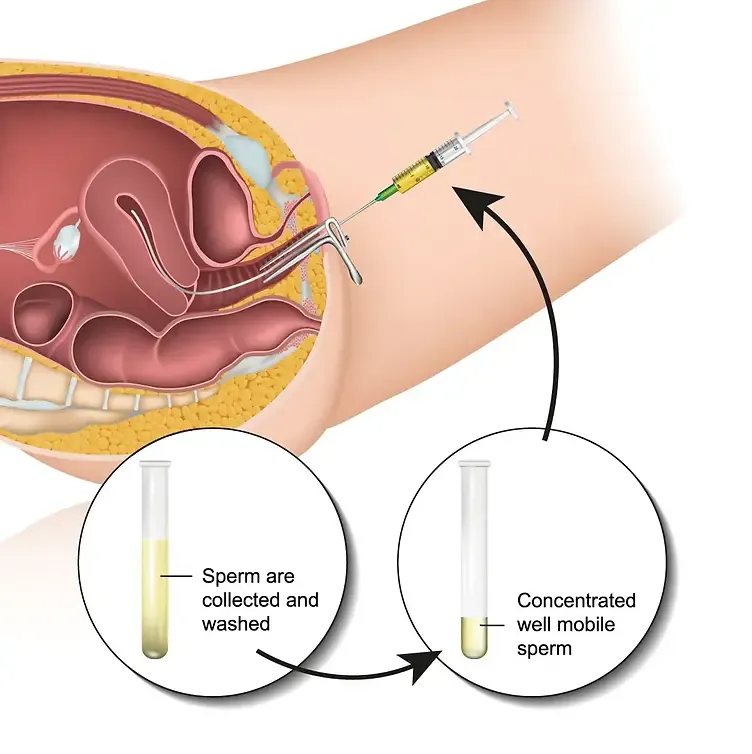
Intrauterine insemination, also known as artificial insemination, is a fertility treatment where sperm is placed directly into a woman’s uterus during her ovulation period. It is a low-tech and less invasive procedure compared to other fertility treatments. IUI is often used when a woman has difficulty conceiving due to issues with the quality or quantity of her partner’s sperm, or when there is an unexplained fertility issue.
The procedure for IUI involves collecting a semen sample from the male partner or a donor. The sample is then washed and prepared in a lab to separate the healthy and motile sperm from the semen. The prepared sperm is then inserted directly into the woman’s uterus using a thin catheter. This process is timed to coincide with the woman’s ovulation period to increase the chances of conception.
Pros of Intrauterine Insemination
1. Cost-effective: IUI is a relatively low-cost fertility treatment compared to other options, making it a more accessible option for couples on a budget.
2. Non-invasive: The procedure for IUI is minimally invasive and does not require any anesthesia, making it a less stressful and more comfortable experience for the woman.
3. Shorter treatment time: Unlike IVF, which requires multiple injections and monitoring, IUI only involves a few appointments, making it a shorter treatment process.
4. Natural conception: IUI allows for natural conception as the sperm is placed directly into the uterus, increasing the chances of fertilization.
Cons of Intrauterine Insemination
1. Lower success rates: The success rates for IUI are lower compared to IVF. This is because the sperm still has to swim through the uterus and into the fallopian tubes to reach the egg, which can be a barrier for some couples.
2. Potential for multiple pregnancies: In some cases, IUI can result in multiple pregnancies, which can be a risk for both the mother and the babies.
3. Requires a healthy uterus and fallopian tubes: For IUI to be successful, the woman must have a healthy uterus and fallopian tubes. If there are any blockages or issues, the sperm may not be able to reach the egg, reducing the chances of conception.
Navigating the Fertility Journey: Intrauterine Insemination vs Low-Tech IVF
What is Low-Tech In Vitro Fertilization (IVF)?
In vitro fertilization, commonly known as IVF, is a more advanced fertility treatment that involves fertilizing an egg with sperm outside of the body in a laboratory. The fertilized egg, or embryo, is then transferred into the woman’s uterus, where it can hopefully implant and result in a pregnancy.
The process for low-tech IVF is similar to traditional IVF, but with fewer medications and injections. The woman’s natural cycle is closely monitored, and a single egg is collected and fertilized with the partner’s sperm in a lab. The resulting embryo is then transferred into the uterus during the woman’s natural ovulation period.
Pros of Low-Tech IVF
1. Higher success rates: IVF has higher success rates compared to IUI, making it a more attractive option for couples struggling with fertility issues.
2. Suitable for various fertility issues: IVF can be used for a variety of fertility issues, including blocked fallopian tubes, endometriosis, and male factor infertility.
3. Genetic testing: With IVF, it is possible to perform genetic testing on the embryos before implantation, reducing the chances of passing on genetic disorders to the child.
Cons of Low-Tech IVF
1. More expensive: IVF is a more expensive fertility treatment compared to IUI, making it a less accessible option for some couples.
2. Invasive: The process of egg retrieval for IVF involves minor surgery and anesthesia, which can be more invasive and stressful for the woman.
3. Higher risk of multiple pregnancies: As multiple embryos are often transferred during IVF, there is a higher risk of multiple pregnancies, which can be a concern for some couples.
Navigating Your Fertility Journey
In conclusion, both IUI and low-tech IVF are viable options for couples struggling with fertility issues. While IUI may be a more cost-effective and less invasive option, IVF has higher success rates and is suitable for a wider range of fertility issues. It is essential to consult with a fertility specialist to determine which option is best for you and your partner, based on your specific circumstances and needs.
No matter which option you choose, it is essential to have a supportive network of friends and family and to take care of your physical and emotional well-being throughout the process. Remember to communicate openly with your partner and healthcare team, and stay positive and hopeful on your journey towards building a family.
SEO Metadata: