Category: Uncategorized

  • Understanding the Process: Intrauterine Insemination vs In Vitro Fertilization

    Understanding the Process: Intrauterine Insemination vs In Vitro Fertilization

    When struggling with infertility, couples often turn to assisted reproductive technologies (ART) to help them achieve their dream of starting a family. Two common methods of ART are intrauterine insemination (IUI) and in vitro fertilization (IVF). While both procedures aim to assist with conception, they have different processes and success rates. In this blog post, we will dive into the details of IUI and IVF, helping readers understand the differences between the two procedures and which may be the best option for them.

    What is Intrauterine Insemination (IUI)?

    IUI, also known as artificial insemination, is a fertility treatment that involves placing sperm directly into a woman’s uterus during ovulation. This procedure is often recommended for couples with unexplained infertility, mild male factor infertility, or cervical factor infertility. It can also be used for same-sex couples or single women who want to conceive using donor sperm.

    The process of IUI begins with monitoring the woman’s ovulation cycle through blood tests and ultrasounds. Once it is determined that she is ovulating, the male partner or donor sperm is collected and washed to remove any impurities. The washed sperm is then inserted into the woman’s uterus using a thin catheter, bypassing the cervix and increasing the chance of fertilization.

    What is In Vitro Fertilization (IVF)?

    IVF is a more complex fertility treatment that involves fertilizing an egg with sperm outside of the body and then transferring the resulting embryo into the woman’s uterus. This procedure is recommended for couples with severe male factor infertility, blocked or damaged fallopian tubes, endometriosis, or unexplained infertility.

    The process of IVF begins with ovarian stimulation, where fertility drugs are used to stimulate the woman’s ovaries to produce multiple eggs. The eggs are then retrieved through a minor surgical procedure and fertilized with sperm in a laboratory. The resulting embryos are monitored for a few days before being transferred into the woman’s uterus. Any remaining embryos can be frozen for future use.

    Key Differences between IUI and IVF
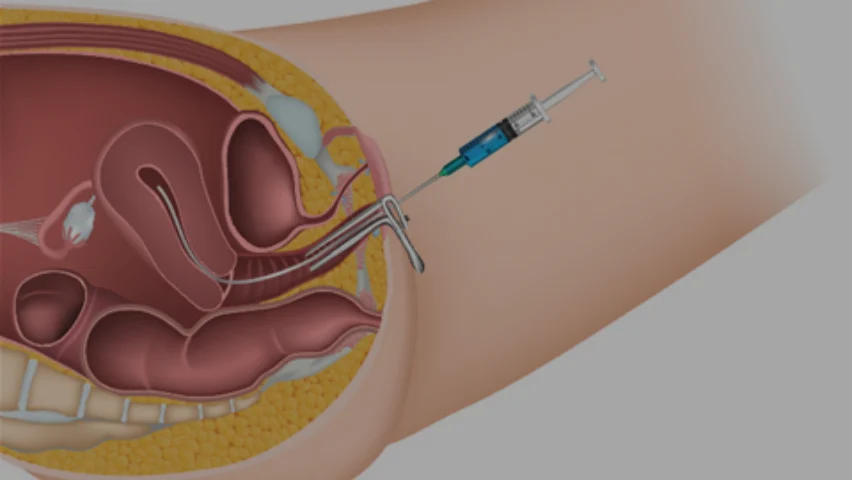
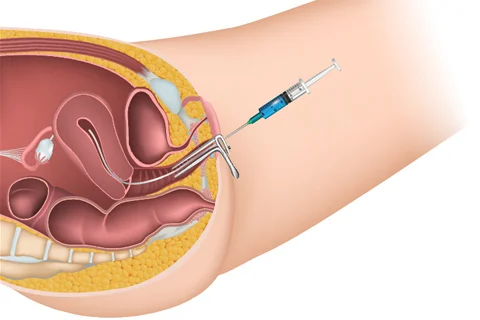
    Illustration of intrauterine insemination (IUI) procedure with syringe and catheter in the uterus.

    Understanding the Process: Intrauterine Insemination vs In Vitro Fertilization

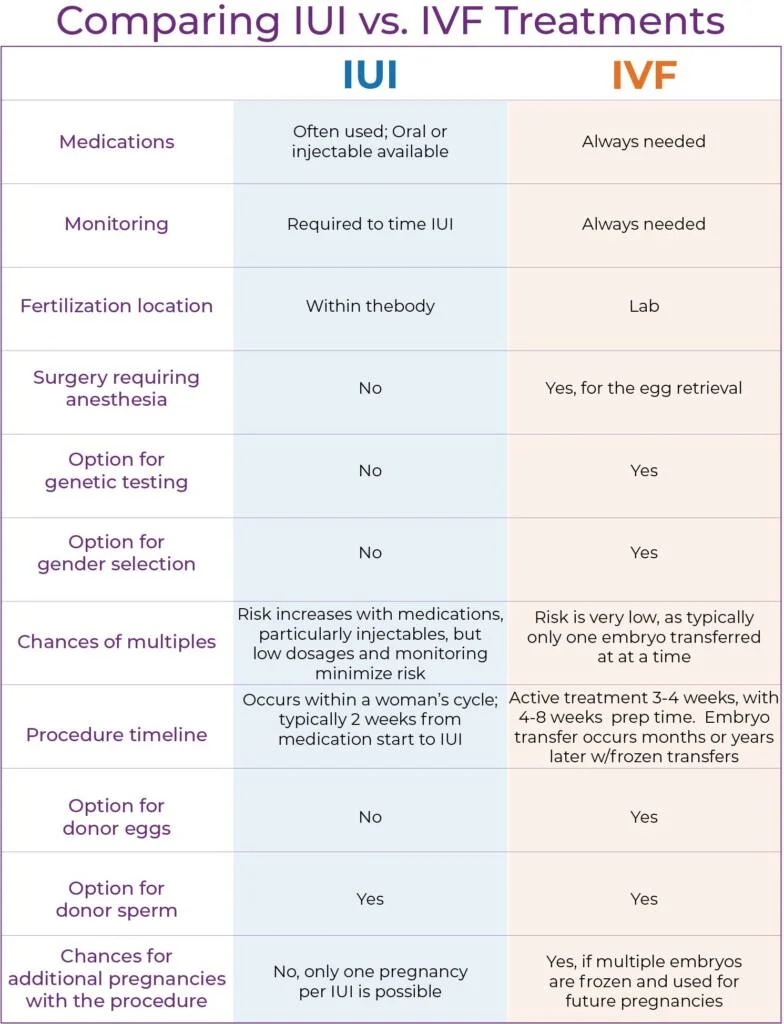
    1. Success Rates: The success rates for IUI and IVF differ significantly. On average, IUI has a success rate of 10-20%, while IVF has a success rate of 40-45%. The success rates can also vary depending on factors such as age, overall health, and the cause of infertility.

    2. Complexity of Procedure: IUI is a relatively simple procedure, while IVF involves multiple steps and more invasive procedures. This can also mean that IVF is more expensive than IUI.

    3. Required Fertility Issues: IUI is recommended for couples with specific fertility issues, while IVF can be used for a wider range of fertility problems.

    4. Number of Eggs Retrieved: In IUI, only one egg is released during ovulation, while in IVF, multiple eggs are retrieved and fertilized. This can increase the chances of pregnancy in IVF.

    Which Procedure is Right for You?

    Choosing between IUI and IVF can be a difficult decision. It is essential to consult with a fertility specialist who can assess your individual situation and recommend the best course of treatment. Factors such as age, overall health, fertility issues, and financial considerations should all be taken into account.

    In general, IUI may be recommended as a first-line treatment for couples with mild fertility issues, while IVF may be recommended for more severe cases. However, every couple’s journey is unique, and what works for one may not work for another.

    Final Thoughts

    Struggling with infertility can be emotionally and physically draining, and choosing the right fertility treatment can feel overwhelming. Understanding the differences between IUI and IVF can help couples make a more informed decision and increase their chances of success. With the help of a fertility specialist, couples can explore their options and find the best treatment plan for their individual situation.

    In summary, IUI and IVF are two common ART procedures used to assist with conception. While IUI involves placing sperm directly into a woman’s uterus during ovulation, IVF involves fertilizing an egg with sperm outside of the body and then transferring the resulting embryo into the uterus. These procedures differ in their success rates, complexity, and recommended fertility issues. Ultimately, the best fertility treatment for each couple will depend on their unique circumstances and should be discussed with a fertility specialist.
  • Success Rates: Intrauterine Insemination vs In Vitro Fertilization

    In today’s world, many couples struggle with infertility and turn to assisted reproductive technology (ART) to help them conceive. Two popular options for ART are Intrauterine Insemination (IUI) and In Vitro Fertilization (IVF). These methods have been used for decades and have helped thousands of couples achieve their dream of having a child. However, there is often confusion and debate surrounding which method has a higher success rate. In this blog post, we will delve into the research and statistics to compare the success rates of IUI and IVF.

    Intrauterine Insemination (IUI) is a fertility treatment that involves inserting washed and prepared sperm directly into the uterus during ovulation. This method is often used for couples who have unexplained infertility, mild male factor infertility, or cervical issues. The success rate of IUI depends on various factors such as age, cause of infertility, and overall health. According to the American Pregnancy Association, the success rate for IUI is around 10-20% per cycle. This means that out of 100 couples, 10-20 will conceive in the first cycle of IUI.

    On the other hand, In Vitro Fertilization (IVF) is a more complex and invasive procedure that involves fertilizing eggs with sperm in a lab and then transferring the resulting embryo(s) into the uterus. This method is often recommended for couples with severe male factor infertility, tubal blockages, or advanced maternal age. The success rate of IVF also depends on various factors, but according to the Centers for Disease Control and Prevention (CDC), the average success rate for IVF in the United States is around 30% per cycle. This means that out of 100 couples, 30 will conceive in the first cycle of IVF.

    It is clear from these statistics that IVF has a higher success rate than IUI. However, it is essential to note that success rates can vary greatly depending on the individual case. For example, the success rate for IVF is higher in younger women, as age plays a significant role in fertility. Additionally, the cause of infertility can also affect success rates. For couples with male factor infertility, IVF may be a more effective option compared to IUI.

    Comparison chart of IUI and IVF treatments, detailing medications, monitoring, procedures, and success rates.

    Success Rates: Intrauterine Insemination vs In Vitro Fertilization

    Another factor to consider is the cost of these treatments. IUI is a less expensive option compared to IVF, as it does not involve the same level of complexity and medication. The average cost of IUI in the US is around $1,000-$2,000 per cycle, while IVF can cost anywhere from $12,000-$15,000 per cycle. This cost difference can be a significant factor for couples when deciding which treatment to pursue.

    It is also essential to understand that success rates are not the only measure of success in fertility treatments. The emotional toll and stress of undergoing these procedures can also play a significant role in a couple’s journey to parenthood. It is crucial for couples to consider their emotional well-being and seek support during this time.

    Furthermore, it is worth noting that both IUI and IVF may require multiple cycles to achieve a successful pregnancy. The success rates mentioned above are per cycle, and it is not uncommon for couples to undergo several cycles before conceiving. This can also add to the overall cost of treatment.

    In conclusion, when comparing the success rates of IUI and IVF, it is clear that IVF has a higher success rate. However, the decision between these two methods should not solely be based on success rates. Couples should also consider other factors such as cost, cause of infertility, and emotional well-being. It is essential to consult with a fertility specialist to determine the best course of treatment for each individual case.

    In summary, when it comes to success rates, In Vitro Fertilization (IVF) has a higher success rate compared to Intrauterine Insemination (IUI). However, success rates can vary greatly depending on individual factors, and other considerations such as cost and emotional well-being should also be taken into account when deciding on a fertility treatment. It is crucial for couples to seek guidance from a fertility specialist and to make an informed decision that is best for their unique situation.

  • Breaking Down the Costs: Intrauterine Insemination vs In Vitro Fertilization

    Blog Title: Breaking Down the Costs: Intrauterine Insemination vs In Vitro Fertilization

    Summary:

    The journey to parenthood can be a challenging and emotional one for many couples. For those struggling with fertility issues, the options of intrauterine insemination (IUI) and in vitro fertilization (IVF) can offer hope of starting or expanding their family. However, along with the emotional and physical toll, these fertility treatments also come with significant financial costs. In this blog post, we will take a closer look at the costs associated with IUI and IVF, and compare the two procedures to help couples make an informed decision about which option is best for their individual situation.

    IUI Cost Breakdown:

    Intrauterine insemination, also known as artificial insemination, is a fertility treatment that involves placing sperm directly into a woman’s uterus, bypassing the cervix and increasing the chances of fertilization. The average cost of one IUI cycle is around $500-$1000, which includes the cost of sperm washing, the procedure itself, and any necessary medications. However, this cost can vary depending on factors such as location, clinic, and additional treatments or tests required. The success rate for IUI ranges from 8-17% per cycle, and multiple cycles may be required to achieve a successful pregnancy.

    IVF Cost Breakdown:

    In vitro fertilization is a more complex and invasive fertility treatment that involves retrieving eggs from a woman’s ovaries and fertilizing them with sperm in a laboratory. The resulting embryos are then transferred into the woman’s uterus, with the goal of achieving pregnancy. The average cost of one IVF cycle is significantly higher than IUI, ranging from $12,000-$15,000. This cost includes the medications, egg retrieval, fertilization, embryo transfer, and monitoring appointments. Additional costs such as anesthesia, genetic testing, and freezing of embryos can add thousands of dollars to the overall cost. The success rate for IVF is higher than IUI, with a range of 30-40% per cycle. However, multiple cycles may still be necessary for a successful pregnancy.

    Comparison of IUI and IVF, illustrating procedures and definitions for each fertility treatment.

    Breaking Down the Costs: Intrauterine Insemination vs In Vitro Fertilization

    Factors Affecting Costs:

    Both IUI and IVF have additional factors that can affect the overall cost of treatment. In the case of IUI, the use of donor sperm can significantly increase the cost, as well as any necessary fertility medications or tests. For IVF, the use of donor eggs or sperm, as well as the need for additional procedures such as intra-cytoplasmic sperm injection (ICSI) or assisted hatching, can also add to the cost. Additionally, some insurance plans may cover a portion of the cost for fertility treatments, so it is important to check with your provider to see what is covered.

    Which Option is Right for You?

    When it comes to deciding between IUI and IVF, there is no one-size-fits-all answer. The decision should be based on several factors, including the cause of infertility, age, and overall health of the couple. For couples with mild fertility issues, IUI may be a more cost-effective and less invasive option. However, for those with more complex fertility issues, IVF may offer a better chance of success. It is important to consult with a fertility specialist to determine the best course of treatment for your individual situation.

    Other Considerations:

    There are other costs associated with both IUI and IVF that couples should also consider. The emotional toll of fertility treatments can be significant, and many couples may require counseling or therapy to cope with the stress and anxiety. Additionally, the time commitment for appointments, procedures, and recovery should also be factored into the overall cost of treatment.

    In conclusion, the costs associated with fertility treatments should not be taken lightly. Both IUI and IVF come with significant financial burdens, and couples should carefully consider their options before making a decision. Consulting with a fertility specialist and discussing all factors, including success rates, additional costs, and personal circumstances, can help couples make an informed decision about which option is right for them.

  • Intrauterine Insemination vs In Vitro Fertilization: Which Is Right for You?

    Intrauterine insemination (IUI) and in vitro fertilization (IVF) are two common fertility treatments used by couples who are struggling with infertility. Both of these procedures involve medical intervention to help a couple conceive, but they differ in various ways. If you and your partner are facing fertility issues, it’s important to understand the differences between these two treatments to determine which one is the right option for you.

    In this blog post, we will explore the differences between IUI and IVF, including their procedures, success rates, and potential risks. We will also discuss the factors that can help you decide which fertility treatment is the best choice for you and your family.

    What is Intrauterine Insemination?
    Intrauterine insemination, also known as artificial insemination, is a fertility treatment that involves inserting washed and concentrated sperm directly into a woman’s uterus. This procedure is usually done around the time of ovulation, when the woman’s ovaries release an egg.

    The IUI procedure begins with the male partner providing a semen sample, which is then processed in a laboratory to separate the sperm from the semen. The sperm is then placed into a catheter, a thin flexible tube, and inserted into the woman’s uterus. This process bypasses the cervix and deposits the sperm directly into the uterus, increasing the chances of fertilization.

    IUI is a relatively simple and non-invasive procedure that can be done in a doctor’s office. It is often recommended for couples who have unexplained infertility, male factor infertility, or women with cervical issues that make it difficult for sperm to reach the egg. It is also a common option for couples with same-sex partners or single women who want to conceive using donor sperm.

    What is In Vitro Fertilization?
    In vitro fertilization is a more complex fertility treatment that involves retrieving eggs from a woman’s ovaries and fertilizing them with sperm in a laboratory. The fertilized eggs, or embryos, are then transferred into the woman’s uterus, where they can implant and develop into a pregnancy.

    The IVF process begins with the woman taking fertility medications to stimulate the ovaries to produce multiple eggs. These eggs are then retrieved through a minor surgical procedure and fertilized in a lab with the sperm. After a few days, the fertilized eggs are checked for viability and the healthiest ones are transferred back into the woman’s uterus.

    IVF is a more invasive and intensive procedure compared to IUI and is usually recommended for couples with more complex fertility issues such as blocked fallopian tubes, severe male factor infertility, or advanced maternal age. It is also a common option for couples who have experienced multiple failed IUI cycles.

    Success Rates of IUI and IVF
    The success rates of IUI and IVF vary depending on various factors such as the age of the woman, the cause of infertility, and the number of previous attempts. Generally, IVF has a higher success rate compared to IUI. According to the American Pregnancy Association, the success rate for IUI is around 10-20% per cycle, while the success rate for IVF ranges from 40-45% for women under 35, and decreases with age.

    illustration of intrauterine insemination procedure with a syringe and catheter in the uterus.

    Intrauterine Insemination vs In Vitro Fertilization: Which Is Right for You?

    Risks and Considerations
    As with any medical procedure, both IUI and IVF carry some risks. The most common risk for IUI is multiple pregnancies, which can lead to complications for both the mother and the babies. IVF has a higher risk of multiple pregnancies, as well as a risk of ovarian hyperstimulation syndrome (OHSS) from the fertility medications.

    The cost of these treatments is also a significant consideration. IUI is generally less expensive than IVF, but it may require multiple attempts to achieve a successful pregnancy. IVF can be a more costly option, but it also has a higher success rate and may be more cost-effective in the long run.

    Factors to Consider in Choosing the Right Treatment
    When deciding between IUI and IVF, there are several factors to consider, including the cause of infertility, the age of the woman, and the couple’s financial situation. It’s essential to discuss these factors with a fertility specialist to determine the best course of action for your specific situation.

    If you and your partner have a known fertility issue, such as blocked fallopian tubes or low sperm count, IVF may be the best option. On the other hand, if you have unexplained infertility, IUI may be recommended as a first-line treatment.

    Another important factor to consider is the age of the woman. As a woman’s age increases, the success rates for both IUI and IVF decrease. Therefore, women over 35 may have a better chance of success with IVF.

    It’s also essential to consider your emotional and mental well-being when choosing a fertility treatment. Both IUI and IVF can be emotionally and physically taxing, so it’s necessary to have a support system in place and be prepared for the potential challenges.

    In Conclusion
    Intrauterine insemination and in vitro fertilization are two common fertility treatments that can help couples achieve their dream of having a child. While they both have their advantages and risks, it’s essential to discuss your options with a fertility specialist and consider your unique circumstances to determine which treatment is best for you.

    Whether you choose IUI or IVF, it’s important to remember that both treatments require patience, perseverance, and a positive mindset. With the right treatment and support, you and your partner can increase your chances of success and start your journey towards parenthood.

    In summary, IUI and IVF are two different fertility treatments with varying procedures, success rates, and risks. Factors such as the cause of infertility, age, and financial situation should be considered when deciding which treatment is best. With proper guidance from a fertility specialist and a supportive mindset, both treatments can help couples achieve their dream of having a child.

  • The Science Behind Conception: Intrauterine Insemination vs In Vitro Fertilization

    Blog Post Title: The Science Behind Conception: Intrauterine Insemination vs In Vitro Fertilization

    Summary:

    Conception is a miraculous process that allows for the creation of new life. For couples struggling with infertility, it can be a difficult and emotional journey. Fortunately, advancements in reproductive technology have made it possible for many couples to achieve their dream of becoming parents. Two of the most commonly used methods for assisted reproduction are intrauterine insemination (IUI) and in vitro fertilization (IVF). While both procedures have the same end goal of helping couples conceive, they differ in their approach and success rates. In this blog post, we will delve into the science behind these two methods and explore their similarities, differences, and success rates.

    Intrauterine Insemination (IUI):

    IUI, also known as artificial insemination, is a form of assisted reproduction where sperm is directly inserted into a woman’s uterus to increase the chances of fertilization. The process begins with the collection of a semen sample from the male partner or a donor. The sample is then washed and prepared in a laboratory to concentrate the healthiest and most active sperm. The prepared sperm is then inserted into the woman’s uterus using a thin catheter, which is a painless and quick procedure.

    The success of IUI depends on several factors, including the quality of the sperm, the woman’s age, and the timing of the procedure. IUI is often recommended for couples with unexplained infertility, mild male factor infertility, or when the woman is unable to produce enough cervical mucus. It is also a common option for same-sex couples and single women who want to conceive.

    In Vitro Fertilization (IVF):

    IVF is a more complex and invasive assisted reproductive technique. It involves the retrieval of eggs from a woman’s ovaries, fertilization of the eggs with sperm in a laboratory, and the transfer of the resulting embryo(s) into the woman’s uterus. The process begins with the woman undergoing hormone injections to stimulate the ovaries and produce multiple eggs. Once the eggs are mature, they are retrieved using a minor surgical procedure. The collected eggs are then fertilized with sperm in a laboratory, and the resulting embryos are monitored for growth and development. After a few days, one or more embryos are transferred into the woman’s uterus, and any remaining embryos can be frozen for future use.

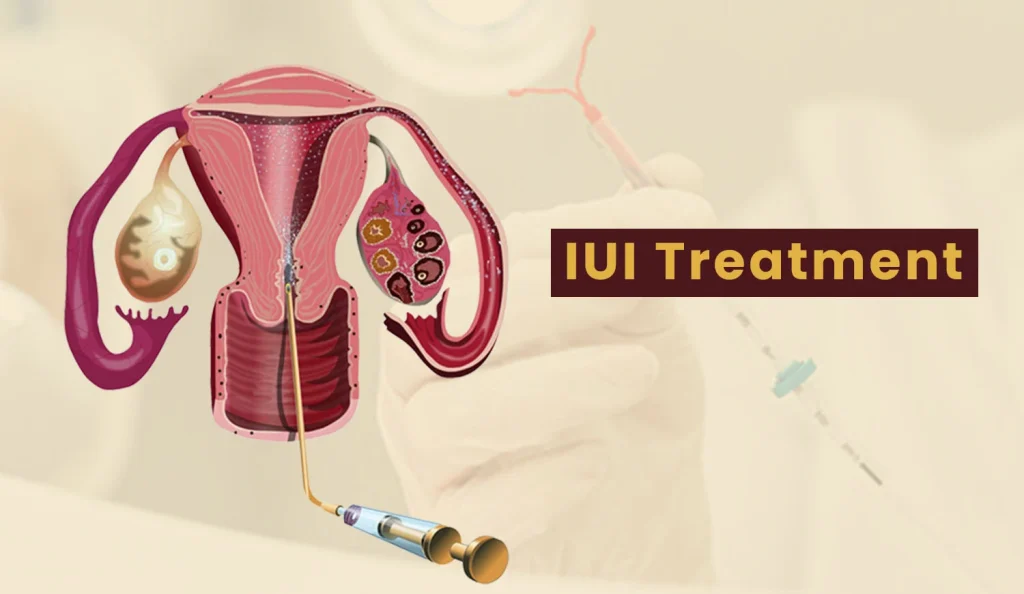
    illustration of the uterus and ovaries with a syringe, labeled "IUI Treatment" in the background

    The Science Behind Conception: Intrauterine Insemination vs In Vitro Fertilization

    IVF has a higher success rate compared to IUI, with an average success rate of 40% per cycle. It is often recommended for couples with more severe infertility issues, such as tubal blockages, endometriosis, or low sperm count. IVF is also a popular choice for couples who have been unsuccessful with other fertility treatments.

    Key Differences between IUI and IVF:

    The main difference between IUI and IVF is the location where fertilization takes place. In IUI, fertilization occurs in the woman’s uterus, while in IVF, it happens in a laboratory. This difference is significant because it affects the chances of fertilization and implantation. In IUI, the sperm has to travel a shorter distance to reach the egg, making it a more natural process. In contrast, IVF bypasses the natural process and fertilizes the egg outside the body, making it a more controlled and precise method.

    Another key difference is the cost and time commitment required for each procedure. IUI is a relatively simple and less expensive procedure, with each cycle costing around $500-$1000. In comparison, IVF is a more involved and costly process, with each cycle costing between $10,000-$15,000. IVF also requires more time commitment, with the woman undergoing hormone injections and multiple appointments for egg retrieval and embryo transfer.

    Success Rates:

    The success rates of both IUI and IVF vary depending on several factors, such as age, overall health, and cause of infertility. Generally, IVF has a higher success rate compared to IUI due to the more controlled and precise nature of the procedure. The chances of success also increase with multiple cycles of IVF, while IUI success rates tend to decline after the third cycle.

    Conclusion:

    Intrauterine insemination and in vitro fertilization are two of the most commonly used assisted reproductive techniques for couples struggling with infertility. While they have the same goal of helping couples conceive, they differ significantly in their approach, success rates, and cost. It is essential to consult with a fertility specialist to determine which method is the best fit for your individual situation.

    In summary, the science behind conception is a complex and fascinating process, and IUI and IVF offer hope for couples facing fertility challenges. These procedures have helped countless couples achieve their dream of becoming parents, and with ongoing advancements in reproductive technology, their success rates will continue to improve.

  • Navigating the World of Fertility Treatments: Intrauterine Insemination vs In Vitro Fertilization

    Navigating the World of Fertility Treatments: Intrauterine Insemination vs In Vitro Fertilization

    For couples struggling with infertility, the journey to parenthood can be a long and emotional one. Fortunately, advancements in fertility treatments have made it possible for many couples to overcome their fertility challenges and successfully conceive. Two commonly used treatments are intrauterine insemination (IUI) and in vitro fertilization (IVF). While both treatments involve artificially assisting with the fertilization process, there are key differences between the two. In this blog post, we will explore the differences between IUI and IVF, and provide information to help you navigate the world of fertility treatments.

    What is Intrauterine Insemination (IUI)?

    Intrauterine insemination, also known as artificial insemination, is a fertility treatment that involves placing sperm directly into a woman’s uterus to increase the chances of fertilization. This procedure is commonly used for couples with mild fertility issues, such as low sperm count or cervical mucus problems. It can also be used for single women or same-sex couples who wish to conceive using donor sperm.

    The IUI process involves several steps. First, the woman’s menstrual cycle is monitored to determine the best time for insemination, usually around the time of ovulation. Then, the male partner or donor provides a semen sample, which is washed and concentrated to increase the number of healthy sperm. The sperm is then inserted into the uterus using a catheter, and the woman may be advised to lie down for a short period to increase the chances of conception.

    What is In Vitro Fertilization (IVF)?

    In vitro fertilization, commonly known as IVF, is a more complex fertility treatment that involves combining eggs and sperm in a laboratory to create embryos, which are then transferred into the woman’s uterus. IVF is typically recommended for couples with more severe fertility issues, such as blocked fallopian tubes, endometriosis, or advanced maternal age.

    Illustration of intrauterine insemination (IUI) procedure with syringe and catheter in the uterus.

    Navigating the World of Fertility Treatments: Intrauterine Insemination vs In Vitro Fertilization

    The IVF process involves several stages. First, the woman’s ovaries are stimulated with hormone injections to produce multiple eggs. These eggs are then retrieved through a minor surgical procedure and combined with sperm in a laboratory to create embryos. The embryos are then monitored for a few days before being transferred into the woman’s uterus. Any remaining embryos may be frozen and used in future cycles.

    Key Differences Between IUI and IVF

    While both IUI and IVF are fertility treatments, they differ in terms of their success rates, cost, and level of invasiveness. IUI is a less invasive and less expensive option compared to IVF, but it also has a lower success rate. According to the American Society for Reproductive Medicine, the success rate for IUI is around 10-20% per cycle, while IVF has a success rate of 40-45% for women under 35. Additionally, IUI can only be used for certain fertility issues, while IVF is more versatile and can be used for a wider range of conditions.

    Another key difference between IUI and IVF is the level of involvement required from the couple. With IUI, the couple only needs to be present for the insemination procedure, while IVF involves a more intensive process of hormone injections, egg retrieval, and embryo transfer. This can be emotionally and physically taxing for both partners, and it is important to carefully consider the level of commitment and support required for each treatment.

    Which Treatment is Right for You?

    Choosing between IUI and IVF can be a difficult decision, and it is important to consult with a fertility specialist to determine the best course of action for your specific situation. Factors such as age, overall health, and the cause of infertility will play a role in determining the most appropriate treatment.

    In general, IUI may be a good option for couples with mild fertility issues and a limited budget, while IVF may be more suitable for couples with more complex fertility issues. However, it is important to keep in mind that every couple’s journey to parenthood is unique, and what works for one couple may not work for another.

    In conclusion, navigating the world of fertility treatments can be overwhelming, but understanding the key differences between IUI and IVF can help you make an informed decision. It is also important to have a strong support system in place, both emotionally and financially, as fertility treatments can be physically and emotionally taxing. Remember to consult with a fertility specialist and discuss all your options before making a decision. With the right treatment and support, many couples have been able to overcome their fertility challenges and achieve their dream of becoming parents.

  • Everything You Need to Know About Intrauterine Insemination and In Vitro Fertilization

    Summary:

    Intrauterine insemination (IUI) and in vitro fertilization (IVF) are two common fertility treatments for couples struggling to conceive. While both procedures involve the use of assisted reproductive technology (ART), they differ in terms of process, success rates, and cost.

    Intrauterine insemination (IUI) is a form of artificial insemination where the sperm is placed directly into the woman’s uterus during ovulation. This increases the chances of the sperm reaching and fertilizing the egg, as it bypasses any potential barriers in the cervix. IUI is often recommended for couples with unexplained infertility, mild male factor infertility, or cervical issues. The procedure is relatively simple, non-invasive, and does not involve any hormonal injections. However, the success rates of IUI are lower compared to other fertility treatments, and it may require multiple cycles for success.

    A person administering an injection into their abdomen with a yellow pen-like device.

    Everything You Need to Know About Intrauterine Insemination and In Vitro Fertilization

    On the other hand, in vitro fertilization (IVF) is a more complex and invasive procedure. It involves the retrieval of eggs from the woman’s ovaries, which are then fertilized with sperm in a laboratory. The resulting embryos are then transferred back into the woman’s uterus, with the goal of achieving a successful pregnancy. IVF is typically recommended for couples with more severe infertility issues, such as blocked fallopian tubes, advanced maternal age, or severe male factor infertility. While IVF has higher success rates compared to IUI, it also comes with a higher price tag and more potential risks and side effects.

    Both IUI and IVF have their own unique benefits and drawbacks, and the choice between the two ultimately depends on the individual circumstances of the couple. It’s important to consult with a fertility specialist to determine the best course of treatment. It’s also essential to understand the process, requirements, and potential risks involved in each procedure before making a decision. With the advancement of technology and medical techniques, more and more couples are able to fulfill their dreams of starting a family through IUI or IVF.

    In conclusion, IUI and IVF are two commonly used fertility treatments that have helped many couples conceive. While IUI is a simpler and less invasive option, IVF has higher success rates and is better suited for more severe infertility cases. It’s important to have a thorough understanding of both procedures and seek guidance from a fertility specialist in order to make an informed decision.

  • Exploring Your Options: Intrauterine Insemination vs In Vitro Fertilization

    Exploring Your Options: Intrauterine Insemination vs In Vitro Fertilization

    For couples struggling with infertility, the journey to starting a family can be overwhelming and full of difficult decisions. Two common fertility treatments that are often considered are intrauterine insemination (IUI) and in vitro fertilization (IVF). While both treatments have the same goal of helping couples conceive, they differ in their procedures, success rates, and costs. In this blog post, we will explore the differences between IUI and IVF, and help you decide which option may be best for you and your partner.

    Intrauterine Insemination (IUI)

    IUI is a relatively simple and non-invasive fertility treatment that involves placing sperm directly into a woman’s uterus to increase the chances of fertilization. This procedure is typically recommended for couples with unexplained infertility, mild male factor infertility, or cervical issues. It can also be used for same-sex couples or single women who are using donor sperm.

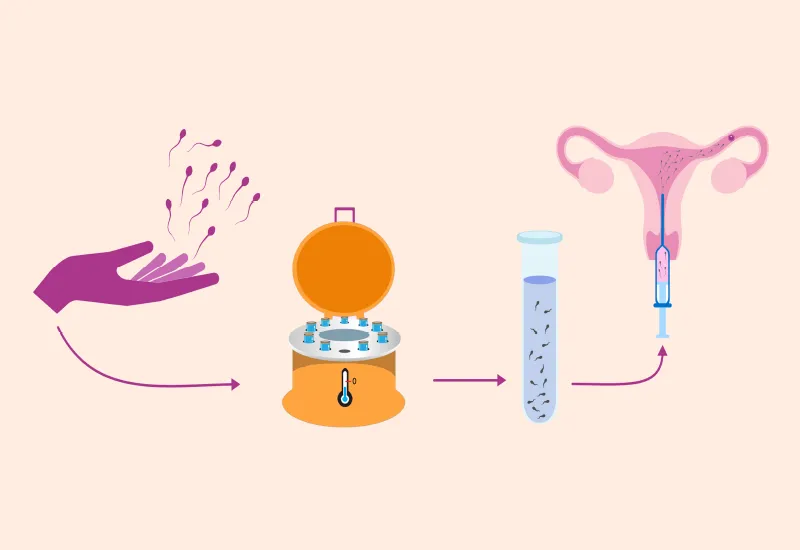
    The IUI process begins with monitoring the woman’s ovulation cycle to determine the best time for insemination. The male partner’s sperm is then washed and prepared in a laboratory to increase the concentration of healthy sperm. The prepared sperm is then inserted into the uterus using a thin catheter, which is a painless procedure that takes only a few minutes. After the procedure, the woman may experience mild cramping and is advised to rest for a short period.

    One of the main advantages of IUI is its affordability compared to other fertility treatments. The cost of IUI can range from $300 to $1000 per cycle, depending on factors such as the type of medications used and the clinic’s location. However, the success rates for IUI are relatively low, with only a 10-20% chance of pregnancy per cycle. This means that multiple cycles may be needed to achieve a successful pregnancy.

    In Vitro Fertilization (IVF)

    illustration of the IUI process, showing sperm collection, preparation, and insertion into the uterus

    Exploring Your Options: Intrauterine Insemination vs In Vitro Fertilization

    IVF is a more complex and invasive fertility treatment that involves retrieving eggs from the woman’s ovaries, fertilizing them with sperm in a laboratory, and then transferring the resulting embryo(s) back into the woman’s uterus. This treatment is typically recommended for couples with more severe fertility issues, such as blocked fallopian tubes, advanced maternal age, or severe male factor infertility.

    The IVF process begins with ovarian stimulation, where the woman takes medications to stimulate the ovaries to produce multiple eggs. These eggs are then retrieved through a minor surgical procedure and combined with sperm in a laboratory. After fertilization, the resulting embryos are monitored for a few days before being transferred into the woman’s uterus. Any remaining embryos can be frozen for future use.

    The success rates for IVF are significantly higher than IUI, with a 40-50% chance of pregnancy per cycle. However, this higher success rate comes at a higher cost, with the average cost of a single IVF cycle ranging from $12,000 to $15,000. Additional costs may include medications, genetic testing, and embryo freezing. Furthermore, IVF can be physically and emotionally demanding, with frequent doctor’s appointments, hormone injections, and potential side effects from medications.

    Which Option is Right for You?

    Choosing between IUI and IVF can be a difficult decision, and it is essential to consult with your doctor to determine the best course of action for your specific fertility issues. Generally, IUI is a good option for couples with less severe fertility issues and a limited budget, while IVF is more suitable for couples with more complex fertility problems and a higher budget.

    It is also essential to consider the potential risks and side effects of each treatment option. IUI has a lower risk of multiple pregnancies, as only one or two eggs may be released during ovulation. However, there is a risk of infection or damage to the uterus during the procedure. On the other hand, IVF has a higher risk of multiple pregnancies due to the possibility of transferring multiple embryos. There is also a risk of ovarian hyperstimulation syndrome (OHSS) and potential complications from the egg retrieval procedure.

    In summary, both IUI and IVF can be effective options for couples struggling with infertility. While IUI is a more affordable and less invasive treatment, IVF has higher success rates but comes at a higher cost and potential risks. It is crucial to weigh your options carefully and consult with your doctor to determine the best treatment plan for you and your partner.

  • The Pros and Cons: Intrauterine Insemination vs In Vitro Fertilization

    Blog Post Title: The Pros and Cons: Intrauterine Insemination vs In Vitro Fertilization

    Infertility affects millions of couples around the world, making it a common and often heartbreaking struggle for many. Fortunately, advances in medical technology have provided options for couples who are having difficulty conceiving naturally. Two popular options for assisted reproduction are Intrauterine Insemination (IUI) and In Vitro Fertilization (IVF). While both procedures have the same goal of helping couples conceive, they differ in method and success rates. In this blog post, we will discuss the pros and cons of IUI and IVF to help couples make an informed decision on which option is best for them.

    Intrauterine Insemination (IUI)

    IUI, also known as artificial insemination, is a simple and less invasive procedure compared to IVF. It involves the placement of washed sperm directly into the uterus, bypassing the cervix, and increasing the chances of fertilization. IUI is often recommended for couples with unexplained infertility, low sperm count, or cervical issues. Here are some pros and cons of IUI to consider:

    Pros:
    1. Less invasive: IUI is a relatively simple and painless procedure that does not require any anesthesia or major surgery. This makes it a convenient option for couples who are not comfortable with more invasive procedures.

    2. Cost-effective: In comparison to IVF, IUI is a more affordable option. The procedure itself is less expensive, and it also does not require as many medications and monitoring, reducing the overall cost.

    3. Increases sperm count: For couples with male factor infertility, IUI can be an effective way to increase the number of sperm reaching the uterus, increasing the chances of fertilization.

    4. Fewer side effects: The medications used in IUI are milder and have fewer side effects compared to those used in IVF.

    Cons:
    1. Lower success rates: The success rate of IUI varies depending on factors such as age, fertility issues, and the number of cycles attempted. On average, the success rate is around 10-20% per cycle, which is lower than IVF.

    2. Limited to certain conditions: IUI is not suitable for all types of infertility. For example, if a woman has blocked fallopian tubes or severe male factor infertility, IUI may not be an effective option.

    3. Multiple pregnancies: One of the risks of IUI is the possibility of multiple pregnancies, which can increase the chances of complications during pregnancy and delivery.

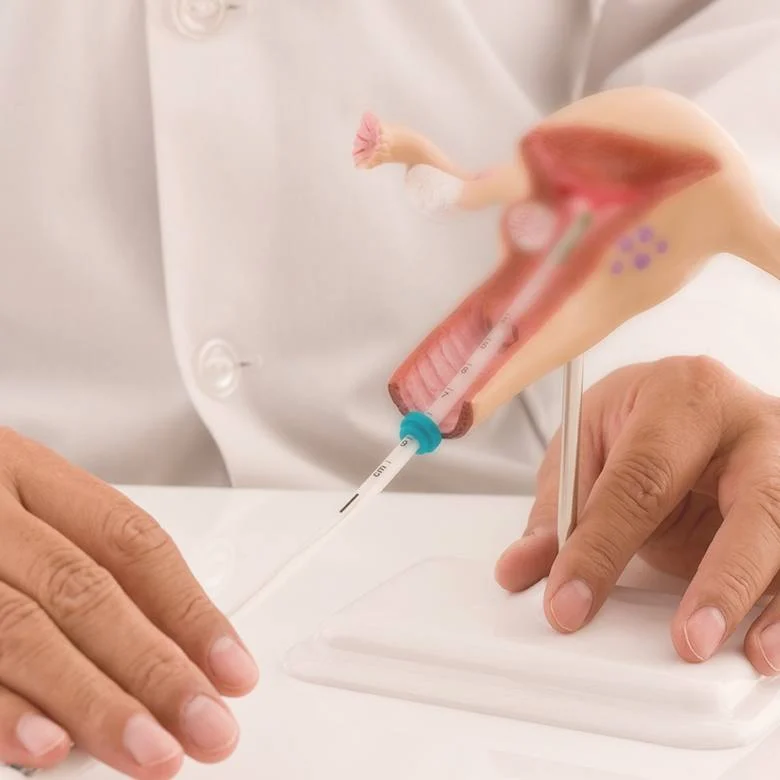
    model of the female reproductive system with a hand demonstrating intrauterine insemination technique

    The Pros and Cons: Intrauterine Insemination vs In Vitro Fertilization

    In Vitro Fertilization (IVF)

    IVF is a more complex and invasive procedure that involves fertilizing an egg with sperm in a laboratory setting before transferring the embryo into the uterus. It is often recommended for couples with more severe fertility issues, such as advanced age, tubal factor infertility, or endometriosis. Let’s take a look at the pros and cons of IVF:

    Pros:
    1. Higher success rates: The success rates of IVF are higher compared to IUI, with an average of 40-50% per cycle. This is because the fertilization process takes place in a controlled laboratory environment, increasing the chances of a successful pregnancy.

    2. Suitable for various fertility issues: IVF is a more versatile option, making it suitable for various types of infertility, including advanced maternal age, tubal blockages, and male factor infertility.

    3. Genetic testing: IVF allows for the option of genetic testing of embryos before implantation, which can help identify any potential genetic disorders and increase the chances of a successful pregnancy.

    4. Higher chances of a single pregnancy: Unlike IUI, IVF has a lower risk of multiple pregnancies, reducing the chances of complications during pregnancy and delivery.

    Cons:
    1. More invasive: IVF involves a more invasive process, including hormone injections, egg retrieval, and embryo transfer, which can be physically and emotionally taxing for some women.

    2. Higher cost: IVF is a more expensive option compared to IUI, with the cost of medications, procedures, and monitoring adding up quickly.

    3. Risks of complications: As with any medical procedure, there are risks of complications with IVF, such as ovarian hyperstimulation syndrome (OHSS) and multiple pregnancies.

    4. Emotional toll: The IVF process can be emotionally draining for couples, as it involves a lot of waiting, uncertainty, and disappointment if the cycle is unsuccessful.

    Summary:
    Both IUI and IVF are viable options for couples struggling with infertility. IUI is a less invasive and more cost-effective option, while IVF has a higher success rate and is suitable for various types of fertility issues. However, both procedures have their own set of pros and cons, and the choice ultimately depends on the couple’s specific situation and preferences. Consulting with a fertility specialist can help couples make an informed decision on which option is best for them.

  • Choosing the Right Fertility Treatment: Intrauterine Insemination vs In Vitro Fertilization

    Summary:

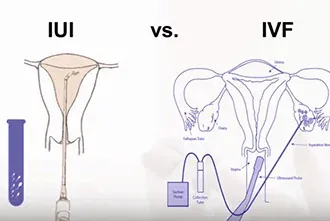
    Comparison of IUI and IVF treatments with diagrams of reproductive anatomy.

    Choosing the Right Fertility Treatment: Intrauterine Insemination vs In Vitro Fertilization

    Couples struggling with infertility often turn to fertility treatments in order to conceive a child. Two of the most common treatments are intrauterine insemination (IUI) and in vitro fertilization (IVF). When deciding which treatment is right for you and your partner, it is important to understand the differences between the two and consider factors such as cost, success rates, and potential risks. IUI involves the placement of washed and prepared sperm directly into the uterus, while IVF involves fertilizing eggs with sperm in a laboratory setting and then transferring the resulting embryo into the uterus. Both treatments have their own benefits and drawbacks, and the decision should be made after consulting with a fertility specialist and considering individual needs and preferences. Ultimately, the goal is to find the best treatment option that will help couples achieve their dream of parenthood.