Intrauterine Insemination vs In Vitro Fertilization: A Cultural Perspective
In today’s society, fertility treatments have become increasingly popular as more and more couples struggle with infertility. Two of the most commonly used methods are intrauterine insemination (IUI) and in vitro fertilization (IVF). While both of these procedures have been proven to help couples conceive, they differ in terms of their cultural implications. In this blog post, we will explore the cultural perspectives surrounding IUI and IVF, and how these perspectives may impact a couple’s decision on which method to choose.
Intrauterine Insemination (IUI)
IUI, also known as artificial insemination, involves placing washed and concentrated sperm directly into a woman’s uterus during ovulation. This method is often preferred by couples who have been trying to conceive for a shorter period of time and may not have any known fertility issues. IUI is also commonly used by same-sex couples and single women who want to conceive using donor sperm.
From a cultural perspective, IUI can be seen as a less invasive and more natural option for fertility treatment. This is because it allows for conception to occur within the woman’s body, rather than in a laboratory. In some cultures, there may be a stigma surrounding IVF and the idea of “playing God” by creating life outside of the traditional method of sexual intercourse. IUI, on the other hand, may be seen as a more socially acceptable option.
However, there are also cultural implications that may make IUI less desirable for certain couples. In some cultures, there may be pressure to have a child biologically related to both partners. This can be a challenge for same-sex couples or couples where one partner has fertility issues. In these cases, IVF may be a more suitable option.
In Vitro Fertilization (IVF)
IVF involves retrieving eggs from a woman’s ovaries and fertilizing them with sperm in a laboratory. The resulting embryo is then transferred into the woman’s uterus, with the hopes of implantation and pregnancy. This method is often seen as a more advanced and high-tech option for fertility treatment.
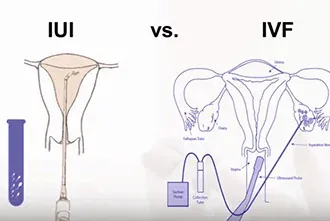
Intrauterine Insemination vs In Vitro Fertilization: A Cultural Perspective
From a cultural perspective, IVF may be viewed as a more “unnatural” way of conceiving. This is due to the fact that conception occurs outside of the woman’s body, and there is involvement of medical technology and procedures. This may be seen as going against traditional beliefs and practices in some cultures.
However, IVF also offers a solution for couples who may have more complex fertility issues, such as blocked fallopian tubes or low sperm count. It also allows for genetic testing of embryos, which may be important for couples with a family history of genetic disorders. In this sense, IVF can be seen as a more practical and effective option for couples facing fertility challenges.
Cultural Factors Influencing the Decision
Apart from the cultural implications of each method, there are also other factors that may influence a couple’s decision on which treatment to pursue. One of these factors is cost. IVF is typically more expensive than IUI, which may make it a less feasible option for some couples. In addition, insurance coverage for fertility treatments may vary, which can also impact a couple’s decision.
Another factor to consider is the success rates of each method. IVF has a higher success rate compared to IUI, especially for couples with more complex fertility issues. However, this also means that there is a higher chance of multiple pregnancies with IVF, which may not be desirable for some couples.
Additionally, the emotional and physical toll of each method may also play a role in a couple’s decision. IVF involves more rigorous medical procedures and a longer treatment timeline, which can be emotionally and physically draining for some couples. On the other hand, IUI may be a less stressful and more accessible option for those who prefer a more natural approach.
Summary
In conclusion, the decision between IUI and IVF is a personal and complex one for couples struggling with infertility. While both methods have their own cultural implications, it is important for couples to consider their own beliefs and values, as well as practical factors such as cost and success rates. It is also crucial for couples to seek guidance from a medical professional and to have open and honest discussions with each other to make the best decision for their unique situation.