From Hormone Therapy to IVF: Treating Female Factor Infertility
Infertility affects approximately 15% of couples worldwide, and female factor infertility is the cause in about one-third of these cases. Female factor infertility refers to the inability of a woman to become pregnant or carry a pregnancy to full term due to issues with her reproductive system. This can include problems with ovulation, the fallopian tubes, or the uterus. Fortunately, advancements in medical technology have provided various treatment options for women struggling with this condition. In this blog post, we will discuss the different stages of treatment for female factor infertility, from hormone therapy to in vitro fertilization (IVF).
Hormone Therapy
Hormone therapy is often the first line of treatment for female factor infertility. It involves taking medication to regulate the hormones involved in the menstrual cycle and ovulation. The most common hormone used in this type of treatment is clomiphene citrate, also known as Clomid. This medication helps stimulate the ovaries to produce more eggs, increasing the chances of conception. It is usually taken orally for five days at the beginning of a woman’s menstrual cycle.
Another type of hormone therapy is gonadotropins, which are injected to stimulate the ovaries directly. This treatment is often recommended for women who do not respond to clomiphene citrate or have other fertility issues, such as polycystic ovary syndrome (PCOS). Gonadotropins can also increase the chances of conceiving multiples, so close monitoring by a fertility specialist is crucial.
Hormone therapy has a success rate of around 20-60% depending on the cause of infertility. It is a less invasive and less expensive option compared to other treatments, making it an excellent first step for many couples.
Intrauterine Insemination (IUI)
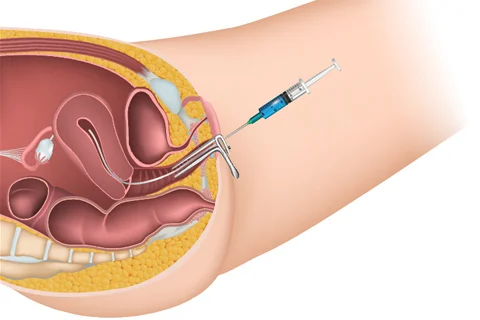
If hormone therapy does not result in pregnancy, the next step is often intrauterine insemination (IUI). This procedure involves placing sperm directly into the woman’s uterus using a catheter. It is often used for couples where the male partner has low sperm count or mobility issues. It can also be recommended for women with cervical issues or those who have trouble conceiving due to endometriosis.
IUI is a relatively simple and painless procedure that can be performed in a fertility clinic. The woman is usually prescribed fertility drugs to stimulate ovulation, and the IUI is performed around the time of ovulation. The success rate of IUI varies but is typically around 10-20% per cycle. It is a less expensive option compared to in vitro fertilization (IVF) but may require multiple attempts to achieve pregnancy.
In Vitro Fertilization (IVF)
In vitro fertilization (IVF) is the most well-known and widely used fertility treatment for female factor infertility. It involves retrieving eggs from the woman’s ovaries, fertilizing them with sperm in a laboratory, and then transferring the resulting embryo(s) to the woman’s uterus.
From Hormone Therapy to IVF: Treating Female Factor Infertility
The process of IVF usually begins with ovarian stimulation, where the woman is given fertility drugs to stimulate her ovaries to produce multiple eggs. The eggs are then retrieved through a minor surgical procedure and fertilized with sperm in a laboratory. The resulting embryos are monitored for a few days before being transferred back into the woman’s uterus.
IVF can be a physically and emotionally demanding process, and it is also the most expensive fertility treatment option. However, it has a higher success rate compared to other treatments, with an average success rate of 40% per cycle. It is also a suitable option for women with more severe fertility issues, such as blocked fallopian tubes or endometriosis.
Intracytoplasmic Sperm Injection (ICSI)
For couples where male factor infertility is the primary issue, intracytoplasmic sperm injection (ICSI) may be recommended. This procedure involves injecting a single sperm directly into an egg in the laboratory. The fertilized egg is then transferred back into the woman’s uterus, similar to the IVF process.
ICSI is often used when the male partner has a low sperm count or issues with sperm quality or motility. It can also be used in cases where previous IVF attempts have failed. The success rate of ICSI is similar to that of IVF, with an average of 40% per cycle.
Egg Donation and Surrogacy
For women who are unable to produce viable eggs or have conditions that make it impossible to carry a pregnancy, egg donation and surrogacy are viable options. Egg donation involves using donated eggs from another woman, fertilizing them with sperm in a laboratory, and transferring the resulting embryo(s) to the intended mother’s uterus. Surrogacy, on the other hand, involves using a surrogate mother to carry the pregnancy to term.
Egg donation and surrogacy can be costly processes and often involve legal and ethical considerations. However, they can be life-changing options for women and couples who have exhausted other treatment options.
In Conclusion
Female factor infertility can be a challenging condition for women and couples trying to conceive. However, with the advancements in medical technology and fertility treatments, many women can still achieve their dream of becoming mothers. From hormone therapy to IVF, there are various options available, and it is essential to work closely with a fertility specialist to determine the best treatment plan for each individual case.
Summary: Female factor infertility refers to the inability of a woman to become pregnant or carry a pregnancy to full term due to issues with her reproductive system. Hormone therapy, intrauterine insemination (IUI), in vitro fertilization (IVF), intracytoplasmic sperm injection (ICSI), egg donation, and surrogacy are all treatment options for female factor infertility. Hormone therapy and IUI are less expensive and less invasive options, while IVF has a higher success rate. ICSI is recommended for male factor infertility, and egg donation and surrogacy are options for women who are unable to produce viable eggs or carry a pregnancy. It is crucial to work with a fertility specialist to determine the best treatment plan for each individual case.