Tag: Reproductive Technology

  • Nature vs Nurture: Exploring the Debate with Artificial Insemination and IVF

    Nature vs Nurture: Exploring the Debate with Artificial Insemination and IVF

    Nature versus nurture has been a long-standing debate in the field of psychology and biology. The question of whether our traits and behaviors are influenced by genetics or environmental factors has intrigued scientists and philosophers for centuries. With the advancements in medical technology, the debate has taken a new turn with the rise of artificial insemination and in vitro fertilization (IVF). In this blog post, we will explore the nature versus nurture debate in the context of these modern reproductive techniques.

    Artificial insemination and IVF have become increasingly popular options for couples struggling with infertility. These techniques involve the use of donated sperm or eggs, or the fertilization of an egg outside of the body, respectively. While these methods have helped many couples to conceive, they have also raised ethical and moral questions about the role of genetics and environment in shaping a child’s development.

    On one hand, proponents of nature argue that genetics play a significant role in determining a child’s traits and behaviors. With artificial insemination and IVF, donors are often chosen based on specific physical and intellectual characteristics, which can greatly influence the traits passed on to the child. This raises concerns about the potential for creating a “perfect” child and the impact it may have on society.

    Furthermore, studies have shown that certain traits, such as intelligence and personality, have a strong genetic component. This has led some to believe that nature has a larger influence on a child’s development than nurture. In the case of artificial insemination and IVF, children may inherit certain traits from donors that they would not have otherwise inherited from their parents. This raises questions about the importance of family and the role of genetics in shaping an individual’s identity.

    On the other hand, advocates for nurture argue that environment plays a crucial role in a child’s development. With artificial insemination and IVF, the child may not have a traditional family structure or may be raised in a different environment than they would have been if conceived naturally. This can have a significant impact on their development, as environmental factors such as parenting style, education, and socioeconomic status can greatly influence a child’s behavior and personality.

    illustration of a uterus with a syringe, representing intrauterine insemination procedure

    Nature vs Nurture: Exploring the Debate with Artificial Insemination and IVF

    Moreover, the process of artificial insemination and IVF itself can also have an impact on a child’s development. The use of fertility drugs and hormones, as well as the physical and emotional stress of the procedures, can affect the child’s health and well-being. This raises questions about the long-term effects of these techniques on a child’s physical and mental health.

    Despite these concerns, there is evidence to suggest that both nature and nurture play a role in a child’s development. Studies have shown that while genetics may determine certain traits, environmental factors can modify or enhance them. This is known as the nature-nurture interaction, where both nature and nurture work together to shape an individual’s development.

    In the case of artificial insemination and IVF, the debate becomes even more complex as the child may have a mix of genetic and environmental influences. This can have both positive and negative effects on their development. For example, the child may inherit a genetic predisposition to a certain disease but may also have access to better healthcare and resources due to their family’s socioeconomic status.

    Moreover, the impact of nature and nurture on a child’s development may also vary depending on the stage of development. While genetics may play a more significant role in early childhood, environmental factors may become more influential in adolescence and adulthood. This further emphasizes the importance of both nature and nurture in shaping an individual’s development.

    In conclusion, the debate between nature and nurture continues to be a complex and ongoing one, especially in the context of artificial insemination and IVF. While these reproductive techniques have opened up new possibilities for couples struggling with infertility, they have also raised important questions about the role of genetics and environment in shaping a child’s development. As our understanding of genetics and the environment evolves, it is crucial to consider both factors in understanding the complex nature of human development.

    In summary, artificial insemination and IVF have sparked a new dimension to the nature versus nurture debate. While proponents of nature argue that genetics play a crucial role in a child’s development, advocates for nurture emphasize the impact of environmental factors. However, research has shown that both nature and nurture interact to shape an individual’s development. With the rise of these reproductive techniques, it is essential to consider the impact of both factors on a child’s development.
  • From IVF to Surrogacy: Exploring Different Types of Assisted Reproduction

    Assisted reproduction, also known as assisted reproductive technology (ART), is a rapidly growing field that has provided hope and fulfilled dreams of parenthood for many couples and individuals struggling with infertility. It refers to any medical procedure that helps to achieve pregnancy by using techniques like in vitro fertilization (IVF), surrogacy, and other methods. In this blog post, we will explore the different types of assisted reproduction and their processes, benefits, and considerations.

    In vitro fertilization (IVF) is one of the most well-known and commonly used assisted reproduction techniques. It involves retrieving eggs and sperm from the intended parents or donors and fertilizing them in a lab. The fertilized eggs, or embryos, are then transferred into the uterus of the intended mother or a gestational carrier for pregnancy. IVF can be used by couples or individuals who struggle with fertility issues, such as blocked or damaged fallopian tubes, low sperm count, or unexplained infertility.

    One of the main advantages of IVF is that it allows people who may not be able to conceive naturally to have a biological child. It also gives the intended parents more control over the timing of conception, as they can choose when to fertilize the eggs and transfer the embryos. However, IVF can be a physically and emotionally demanding process, and it may not be successful for everyone. It also comes with a high price tag, making it inaccessible for many people.

    Another type of assisted reproduction is surrogacy. Surrogacy involves using a gestational carrier, also known as a surrogate, to carry and give birth to a child for the intended parents. There are two types of surrogacy: traditional surrogacy and gestational surrogacy. In traditional surrogacy, the surrogate’s own eggs are used, making her the biological mother of the child. In gestational surrogacy, the surrogate carries the embryo created with the intended parents’ or donors’ eggs and sperm. This allows the intended parents to have a genetic connection to the child.

    Surrogacy is often chosen by couples or individuals who are unable to carry a pregnancy due to medical reasons, same-sex couples, or individuals who do not have a uterus. It also provides a solution for those who have had unsuccessful IVF attempts or multiple miscarriages. However, surrogacy is a complex process that involves legal and emotional considerations for all parties involved. It also comes with a high cost, and the laws and regulations surrounding surrogacy vary greatly from country to country.

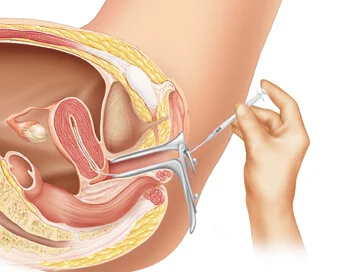
    illustration of intrauterine insemination procedure with a hand holding a speculum and syringe near the uterus

    From IVF to Surrogacy: Exploring Different Types of Assisted Reproduction

    Apart from IVF and surrogacy, there are other forms of assisted reproduction that may be used depending on an individual or couple’s specific needs. These include intrauterine insemination (IUI), where sperm is inserted directly into the uterus, and intracytoplasmic sperm injection (ICSI), where a single sperm is injected into an egg to facilitate fertilization. These techniques are typically used for male infertility issues or when IVF is not an option.

    Another emerging form of assisted reproduction is egg and sperm freezing, also known as cryopreservation. This technique allows individuals or couples to freeze and store their eggs or sperm for future use, which can be helpful in cases of cancer treatment or for those who wish to delay parenthood. It also provides a solution for individuals who may not have a partner at the time but want to preserve their fertility for later.

    While assisted reproduction has brought hope and joy to many individuals and couples, it is not without its challenges and controversies. Some ethical concerns surrounding the use of ART have been raised, such as the creation and disposal of embryos and the potential exploitation of women in surrogacy arrangements. It is important for individuals and couples to carefully consider their options and consult with medical professionals and legal experts before embarking on any assisted reproduction journey.

    In conclusion, assisted reproduction techniques like IVF, surrogacy, and others have revolutionized the field of reproductive health and provided a way for individuals and couples to overcome fertility challenges and have children. Each method has its own unique benefits and considerations, and it is essential for individuals to research and discuss their options with their healthcare providers. While there may be challenges and controversies surrounding assisted reproduction, it has undoubtedly brought joy and fulfillment to countless families around the world.

    SEO metadata: