Blog Post:
Making an Informed Choice: Educating Yourself on Fertility Options
Couples often dream of starting a family and having children. However, for some, this dream may not come easily or naturally. Infertility affects millions of couples worldwide, and it can be a challenging journey to navigate. Fortunately, with advancements in medical technology, there are now several fertility options available for those struggling to conceive. However, with so many options, it can be overwhelming and confusing to make an informed decision. In this blog post, we will discuss the importance of educating yourself on fertility options and how to make an informed choice.
What is fertility?
Before diving into the various fertility options, it is essential to understand what fertility means. Fertility refers to a person’s ability to conceive and carry a pregnancy to full term. Both men and women can experience fertility issues due to various reasons such as age, medical conditions, and lifestyle choices. It is crucial to note that infertility does not just affect women; men can also contribute to a couple’s fertility struggles.
Understanding your fertility status
The first step in educating yourself on fertility options is understanding your fertility status. If you and your partner have been trying to conceive for over a year without success, it is recommended to consult a fertility specialist. They will conduct tests to determine your fertility status and identify any underlying issues. Understanding your fertility status will help you and your doctor decide on the best course of action and fertility treatment options that are suitable for you.
Fertility options
There are several fertility options available, and your doctor will recommend the best one based on your fertility status and medical history. Let’s take a look at some of the most common fertility options:
1. Intrauterine Insemination (IUI)
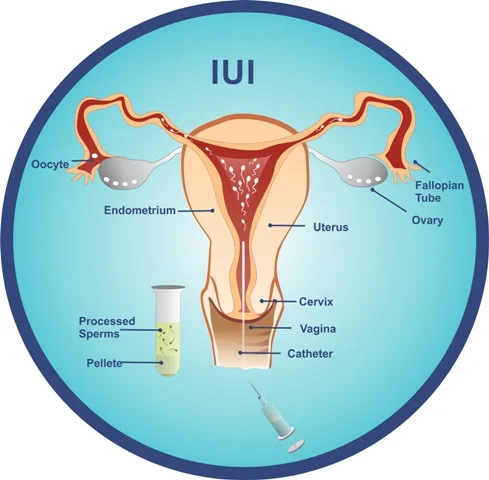
Intrauterine insemination, also known as artificial insemination, is a form of assisted reproductive technology (ART) that involves placing sperm directly into a woman’s uterus. This method is used to overcome issues such as low sperm count, poor sperm mobility, or endometriosis.
2. In vitro fertilization (IVF)
In vitro fertilization is another form of ART that involves fertilizing an egg with sperm outside of the body and then transferring the embryo into the woman’s uterus. This method is commonly used for women who have blocked or damaged fallopian tubes, endometriosis, or unexplained infertility.
3. Egg or Sperm Donation
Making an Informed Choice: Educating Yourself on Fertility Options
For couples who are unable to produce viable eggs or sperm, egg or sperm donation may be an option. This involves using donated eggs or sperm from a donor to create an embryo. This method is often used by same-sex couples or individuals who have a genetic condition that can be passed on to their child.
4. Surrogacy
Surrogacy is an option for women who are unable to carry a pregnancy to full term. It involves using a surrogate to carry the pregnancy and give birth to the child. Surrogacy can be either traditional, where the surrogate’s egg is used, or gestational, where the embryo is created using the intended parents’ egg and sperm.
5. Adoption
Adoption is another option for couples who are unable to conceive. It involves legally adopting a child and providing them with a loving and stable home. Adoption can be a rewarding and fulfilling way to start a family.
Making an informed choice
Now that you are aware of the various fertility options available, it is crucial to make an informed choice. Here are some tips to help you make the right decision:
1. Educate yourself: The more you know about each fertility option, the better equipped you will be to make a decision. Do your research, ask questions, and consult with your doctor to gain a better understanding of each option.
2. Consider your emotional, physical, and financial capabilities: Fertility treatments can be emotionally, physically, and financially taxing. Consider all these aspects before making a decision. It is essential to choose an option that you and your partner are both comfortable with.
3. Seek support: Going through fertility struggles can be emotionally draining. Seek support from your partner, family, friends, or a support group. It can be helpful to talk to others who have gone through similar experiences and get their insights and advice.
4. Be open and flexible: Sometimes, the first fertility option may not work, and that’s okay. Be open to trying other options and be flexible with your plans. Remember that the end goal is to start a family, and the journey may not always go as planned.
5. Trust your instincts: Ultimately, it is essential to trust your instincts and make a decision that feels right for you and your partner. Every couple’s fertility journey is unique, and what works for others may not necessarily work for you.
In conclusion, educating yourself on fertility options is crucial in making an informed choice. Be sure to understand your fertility status, explore the available options, and consider all aspects before making a decision. Remember to seek support and trust your instincts throughout this journey. With the right knowledge and support, you can make the best decision for you and your partner to start a family.
Summary:
Educating yourself on fertility options is crucial when facing infertility struggles. Fertility refers to a person’s ability to conceive and carry a pregnancy to full term, and both men and women can experience fertility issues. Understanding your fertility status is the first step, and based on that, a fertility specialist may recommend different options such as IUI, IVF, egg or sperm donation, surrogacy, or adoption. It is essential to make an informed choice by educating yourself, considering your emotional, physical, and financial capabilities, seeking support, being open and flexible, and trusting your instincts. With the right knowledge and support, you can make the best decision for you and your partner to start a family.