In today’s world, many couples face the challenge of infertility. For some, the journey to parenthood may not be as straightforward as they had hoped. In such cases, assisted reproductive technology (ART) can be a viable option to help them conceive. Two common methods of ART are Intrauterine Insemination (IUI) and In Vitro Fertilization (IVF). While both procedures aim to assist with conception, they have significant differences. In this blog post, we will take a closer look at the steps involved in IUI and IVF, their pros and cons, and how you can determine which one is right for you.
Intrauterine Insemination (IUI):
IUI, also known as artificial insemination, is a relatively simple and less invasive procedure. It involves placing sperm directly into the uterus during the woman’s ovulation period. The sperm can be from a male partner or a donor, depending on the couple’s situation. The IUI process can be divided into four main steps:
1. Ovulation Induction:
Before the IUI procedure, the woman will undergo ovulation induction, which involves taking fertility drugs to stimulate the ovaries to produce multiple eggs. This step is crucial as it increases the chances of successful fertilization.
2. Sperm Preparation:
The sperm sample is collected from the male partner or donor and then washed and concentrated to separate the healthy sperm from the seminal fluid. This process helps to increase the chances of fertilization and reduce the risk of complications.
3. Insemination:
Once the sperm is prepared, it is inserted into the uterus through a thin, flexible catheter. This process is painless and takes only a few minutes to complete.
4. Monitoring:
After the insemination, the woman will be asked to rest for a short period before going home. She will then need to visit her doctor after two weeks for a pregnancy test to confirm if the procedure was successful.
Pros of IUI:
– Less invasive and less expensive compared to IVF
– Can be done with a partner’s or donor’s sperm
– Increases the chances of conception for couples with mild fertility issues
– Can be done in a natural menstrual cycle without taking fertility drugs
Cons of IUI:
– Success rate is lower than IVF
– Does not address underlying fertility issues
– Not suitable for couples with severe infertility issues such as blocked fallopian tubes or low sperm count
– Increased risk of multiple pregnancies
In Vitro Fertilization (IVF):
IVF is a more complex and invasive procedure compared to IUI. It involves fertilizing the egg with sperm outside the body in a laboratory and then transferring the resulting embryo into the woman’s uterus. The IVF process can be divided into five main steps:
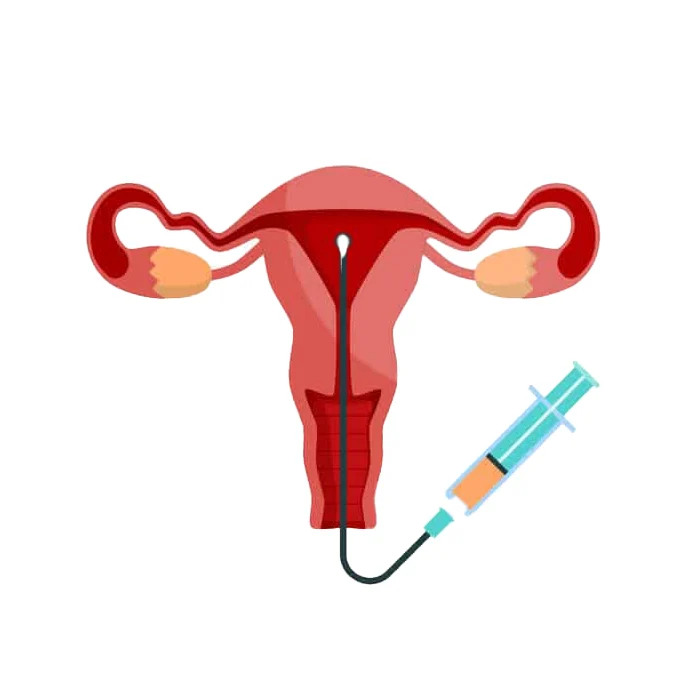
Intrauterine Insemination vs In Vitro Fertilization: A Step-by-Step Comparison
1. Ovarian Stimulation:
Similar to IUI, IVF also requires ovulation induction to stimulate the ovaries to produce multiple eggs. However, the dosage of fertility drugs used in IVF is higher to increase the chances of having more viable eggs for fertilization.
2. Egg Retrieval:
When the eggs are mature, they are retrieved through a minor surgical procedure called follicular aspiration. This involves using a thin needle to remove the eggs from the ovaries.
3. Fertilization:
Once the eggs are retrieved, they are mixed with the sperm in a laboratory to achieve fertilization. This can be done through traditional IVF, where the sperm is placed in a dish with the eggs, or through Intracytoplasmic Sperm Injection (ICSI), where a single sperm is injected directly into the egg.
4. Embryo Culture:
After fertilization, the embryos are allowed to grow and develop in a controlled environment for three to five days.
5. Embryo Transfer:
Finally, the doctor will transfer one or more embryos into the woman’s uterus through a thin catheter. Any remaining viable embryos can be frozen for future use.
Pros of IVF:
– Higher success rate compared to IUI
– Can address various fertility issues, including severe infertility
– Allows for genetic testing of embryos before transfer
– Higher chances of multiple pregnancies for couples who desire it
Cons of IVF:
– More invasive and expensive compared to IUI
– Requires fertility drugs and hormonal injections, which can have side effects
– Increased risk of multiple pregnancies
– Emotional and physical toll due to the uncertainty of the outcome
Which one is right for you?
The decision between IUI and IVF ultimately depends on various factors, including the couple’s age, fertility issues, and financial situation. If the female partner has a healthy reproductive system and the male partner has good sperm quality, IUI may be a suitable option. On the other hand, if the couple has severe fertility issues or has been trying to conceive for a long time without success, IVF may be a better choice.
In conclusion, both IUI and IVF are effective methods of ART that can help couples struggling with infertility conceive. It is essential to consult with a fertility specialist to determine the best course of action for your specific situation. With advancements in technology and ongoing research in the field of reproductive medicine, there is hope for couples facing fertility challenges to fulfill their dream of becoming parents.
Summary:
Intrauterine Insemination (IUI) and In Vitro Fertilization (IVF) are two common methods of assisted reproductive technology (ART) used to help couples conceive. IUI is a less invasive and less expensive procedure that involves placing sperm directly into the uterus during ovulation, while IVF is a more complex and invasive procedure that involves fertilizing the egg with sperm outside the body and then transferring the embryo into the uterus. Both procedures have their pros and cons, and the decision between the two ultimately depends on various factors. Consulting with a fertility specialist is crucial in determining the best course of action for each individual couple.