As more and more couples are struggling with infertility, the demand for fertility treatments continues to rise. These treatments not only offer hope for those who want to start a family, but they also provide options for same-sex couples and single individuals who want to become parents. However, when it comes to choosing a fertility treatment, age plays a significant role in determining the most suitable option. In this blog post, we will explore the role of age in choosing a fertility treatment, specifically comparing two commonly used methods: Intrauterine Insemination (IUI) and Donor Insemination (DI).
Age and fertility are closely intertwined, with a woman’s fertility declining as she ages. According to the American Society for Reproductive Medicine, a woman’s fertility starts to decline in her early 30s and significantly decreases after the age of 35. This decline is due to a decrease in the quantity and quality of eggs, making it more challenging to conceive naturally. As a result, many women in their late 30s and 40s turn to fertility treatments to increase their chances of getting pregnant.
When it comes to IUI and DI, both methods involve the use of assisted reproduction techniques but differ in the source of sperm used. IUI involves placing washed and concentrated sperm directly into the uterus, while DI uses donor sperm to fertilize the egg. Let’s take a closer look at how age affects the success rates of these two methods.
Intrauterine Insemination (IUI)
IUI is a popular fertility treatment that is often the first choice for couples who are struggling to conceive. This method is commonly used when there are issues with sperm quality, low sperm count, or unexplained infertility. IUI is also a less invasive and less expensive option compared to other fertility treatments.
One of the main factors that affect the success of IUI is the age of the woman. As a woman’s age increases, the quality and quantity of her eggs decrease, making it more challenging to conceive through IUI. The success rate of IUI in women under 35 is around 10-20%, but this rate drops to 5-10% in women over 40. This is because the quality of eggs in older women is lower, and there is a higher chance of chromosomal abnormalities, which can lead to miscarriage or birth defects.
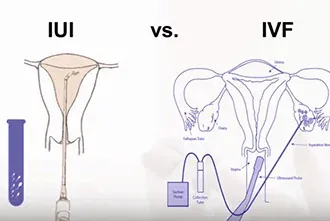
The Role of Age in Choosing a Fertility Treatment: IUI vs DI
Another factor to consider is the age of the male partner. While IUI can help overcome male infertility issues such as low sperm count, the age of the male partner can also affect the success rate. As men age, their sperm quality and quantity also decline, which can impact the fertilization and overall success of IUI.
Donor Insemination (DI)
Donor Insemination, also known as donor sperm, is another commonly used fertility treatment, especially for single women and same-sex couples. This method involves using donor sperm from a sperm bank or known donor to fertilize the woman’s egg. The success rate of DI is higher compared to IUI, with a 20-30% success rate in women under 35.
Age also plays a significant role in the success of DI, but in a slightly different way. Unlike IUI, where the age of the woman is the main factor, the age of the sperm donor is crucial in DI. Sperm donors are typically young and healthy individuals, and the quality of their sperm is not affected by age. However, the age of the sperm donor can still indirectly affect the success of DI. As women age, the quality of their uterine lining and cervical mucus decreases, making it more difficult for the sperm to reach and fertilize the egg. Therefore, using a younger sperm donor can increase the chances of success in DI.
Apart from the age of the sperm donor, the age of the woman can also affect the success of DI. As women age, their reproductive system becomes less receptive to pregnancy, and they are more likely to experience complications such as miscarriage. This can also impact the success of DI, making it crucial to consider the age of the woman when choosing this method.
In conclusion, age plays a significant role in choosing a fertility treatment, and it is essential to consider it carefully when deciding between IUI and DI. While IUI may be a more suitable option for younger women, DI may offer better success rates for women in their late 30s and 40s. Ultimately, it is crucial to consult with a fertility specialist to determine the best treatment option based on age, overall health, and individual circumstances.
In summary, age and fertility treatment are closely connected, with a woman’s age being a critical factor in the success of both IUI and DI. While IUI may be more suitable for younger women, DI may offer better success rates for women in their late 30s and 40s. It is essential to consult with a fertility specialist to determine the best treatment option based on age, overall health, and individual circumstances.