Blog Post: The Impact of Age on Fertility Treatments: Intrauterine Insemination vs Low-Tech IVF
The journey towards parenthood can be a challenging one for many couples, especially when faced with fertility issues. As women age, their fertility declines, making it more difficult to conceive naturally. In such cases, fertility treatments become a viable option for couples looking to start a family. However, not all fertility treatments are created equal, and age can play a significant role in the success of these treatments. In this blog post, we will explore how age impacts two common fertility treatments: intrauterine insemination (IUI) and low-tech in vitro fertilization (IVF).
The Biological Clock and Fertility
Before diving into the impact of age on fertility treatments, it is essential to understand the concept of the biological clock. Women are born with a finite number of eggs, and as they age, the quantity and quality of these eggs decline. This means that the chances of conceiving naturally decrease with age, and the risk of chromosomal abnormalities increases. For women over the age of 35, the chances of getting pregnant each month are around 20%, and this decreases to just 5% for women over the age of 40.
Impact of Age on Intrauterine Insemination (IUI)
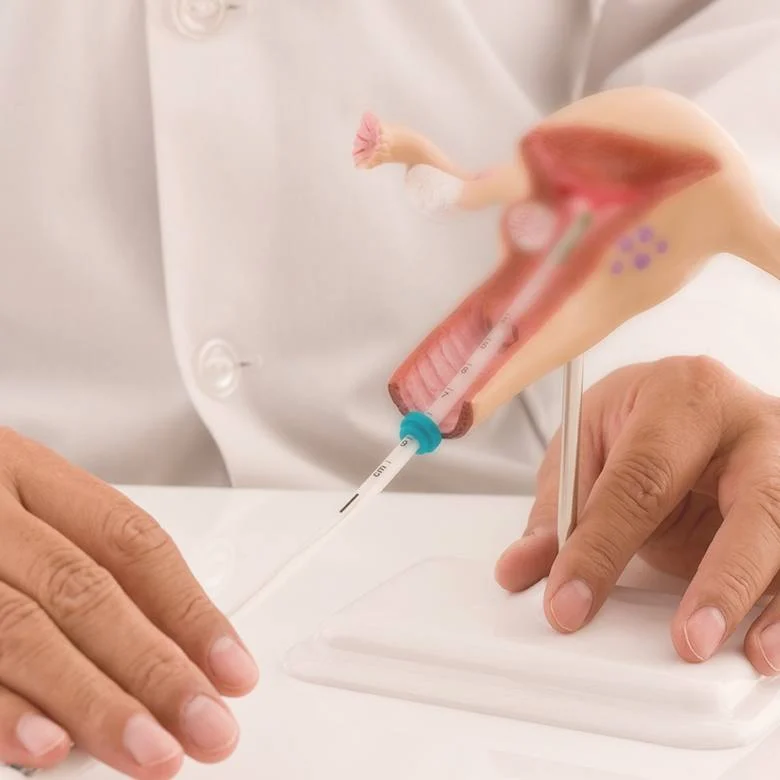
IUI is a fertility treatment that involves placing sperm directly into a woman’s uterus during ovulation. It is often used for couples with unexplained infertility, mild male factor infertility, or cervical issues. The success rates of IUI vary depending on a woman’s age. For women under the age of 35, the success rate is around 10-20% per cycle. However, for women over 40, the success rate drops to just 1-5% per cycle.
One of the reasons for the decline in success rates with IUI as women age is due to the quality of their eggs. As a woman gets older, the quality of her eggs decreases, making it more difficult for fertilization to occur. Additionally, older women are more likely to have underlying fertility issues, such as endometriosis or blocked fallopian tubes, which can also impact the success of IUI.
Impact of Age on Low-Tech IVF
The Impact of Age on Fertility Treatments: Intrauterine Insemination vs Low-Tech IVF
Low-tech IVF, also known as mild stimulation IVF or mini-IVF, is a less invasive and less costly form of traditional IVF. It involves using fewer fertility drugs to stimulate the ovaries and retrieve a smaller number of eggs. This method is often recommended for women with low ovarian reserve or for those who have had unsuccessful IUI cycles.
For women under 35, low-tech IVF has a success rate of around 25-30% per cycle. However, as women age, the success rates decrease significantly. For women over the age of 40, the success rate drops to just 5-10% per cycle. The decline in success rates with low-tech IVF is due to the same factors as IUI, including the quality and quantity of eggs.
Which Fertility Treatment is Best for Different Age Groups?
The decision between IUI and low-tech IVF for couples struggling with fertility can be a difficult one, especially when considering the impact of age. For women under 35, both IUI and low-tech IVF have similar success rates, with the added benefit of being less invasive and less costly. For women over 40, the chances of success are significantly higher with low-tech IVF. However, the success rates are still relatively low, and many couples may opt for traditional IVF, which has a higher success rate but is also more invasive and expensive.
It is crucial to consult with a fertility specialist when deciding on a fertility treatment, as they can assess each individual’s unique situation and recommend the best course of action.
Conclusion
Age plays a significant role in the success of fertility treatments, and as women age, their chances of conceiving decreases. IUI and low-tech IVF are two common fertility treatments that can help couples struggling with fertility issues. However, the success rates of these treatments decline with age, and it is essential to consult with a fertility specialist to determine the best course of action.
In summary, as women age, the success rates of both IUI and low-tech IVF decrease significantly. For women under 35, both treatments have similar success rates, while for women over 40, low-tech IVF may be a more suitable option. Overall, the impact of age on fertility treatments highlights the importance of seeking medical advice and exploring all available options when trying to conceive.