Intrauterine insemination (IUI) and intracervical insemination (ICI) are two common fertility treatments that involve placing sperm inside a woman’s reproductive tract in order to increase the chances of fertilization and pregnancy. While both procedures share similar goals, there are important differences between IUI and ICI that couples should be aware of when considering which option is best for them. In this blog post, we will break down the key differences between IUI and ICI, including the procedure itself, success rates, and potential risks.
First, let’s start with the basics. IUI and ICI are both forms of artificial insemination, which means that they involve placing sperm directly into a woman’s reproductive tract rather than relying on natural conception through sexual intercourse. This can be beneficial for couples who are struggling with male factor infertility, have difficulty with traditional intercourse, or are single or same-sex couples seeking to conceive.
The main difference between IUI and ICI lies in the location where the sperm is inserted. In IUI, the sperm is placed directly into the woman’s uterus, while in ICI, the sperm is deposited into the cervix. This difference in placement can have implications for the success rates of each procedure.
In terms of the procedure itself, IUI is typically more involved and requires medical assistance. The woman will need to undergo hormonal stimulation to produce multiple eggs, which are then monitored through ultrasound. Once the eggs are mature, the male partner will provide a semen sample, which is then washed and concentrated to increase the number of healthy sperm. The sperm is then placed into a catheter and inserted into the uterus through the cervix. The entire process usually takes less than 30 minutes and may cause mild discomfort.
On the other hand, ICI is a simpler and less invasive procedure that can be performed at home or in a medical setting. The male partner collects a semen sample and uses a syringe or cervical cap to insert it into the cervix. This can be done without the assistance of a healthcare provider, but some couples may choose to have a healthcare professional perform the procedure for them.
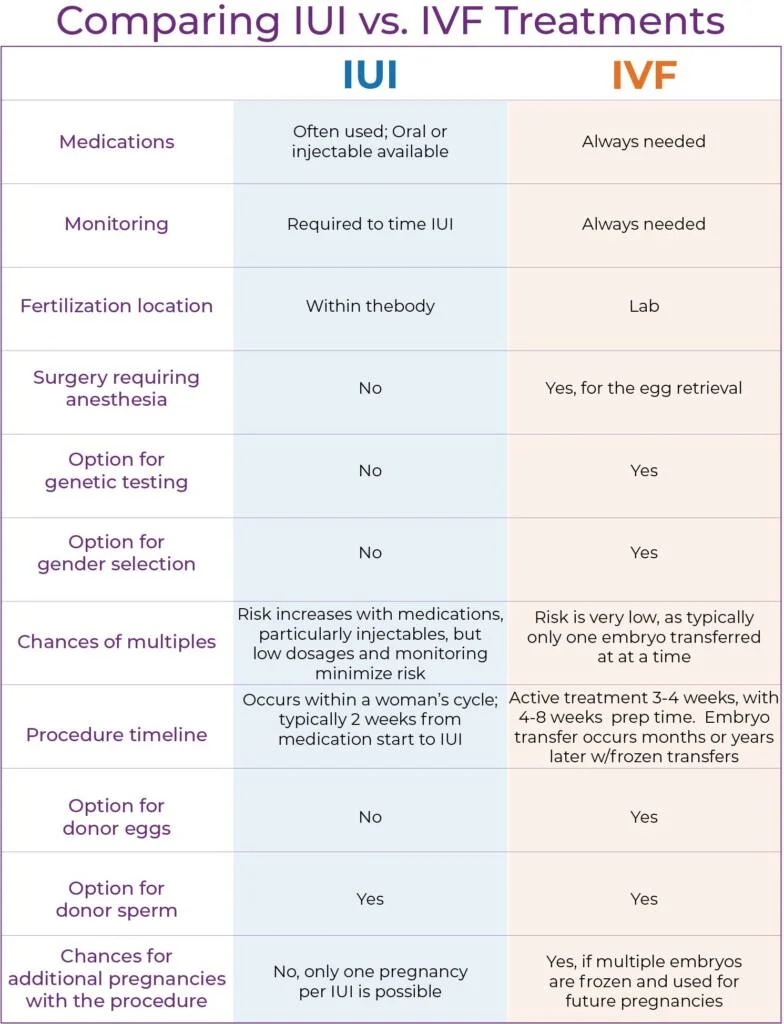
Breaking Down the Differences: Intrauterine Insemination vs Intracervical Insemination
One of the key differences between IUI and ICI is the success rates. IUI has higher success rates compared to ICI, with studies showing a 10-20% chance of pregnancy per cycle for IUI, while ICI has a lower success rate of 5-10%. This is because IUI places the sperm directly into the uterus, which is a more favorable environment for fertilization compared to the cervix. Additionally, IUI also allows for more sperm to reach the egg, increasing the chances of fertilization.
Another important factor to consider is the timing of the procedure. IUI must be done at a specific time during a woman’s menstrual cycle, usually around the time of ovulation. This means that couples will need to carefully track their cycles and be available for the procedure at the designated time. On the other hand, ICI can be done at any time during a woman’s cycle, making it a more flexible option for couples.
When it comes to potential risks and side effects, both IUI and ICI carry similar risks. These include infection, cramping, and discomfort during the procedure. There is also a small risk of multiple pregnancies with both procedures, especially with the use of fertility drugs in IUI. However, these risks are generally low and can be managed with proper medical supervision.
In summary, IUI and ICI are two common fertility treatments that involve the placement of sperm inside a woman’s reproductive tract. While both procedures have similar goals, they differ in terms of the procedure itself, success rates, and potential risks. IUI is a more involved procedure that is performed in a medical setting and has higher success rates, while ICI is simpler and can be done at home but has lower success rates. Couples should consult with their healthcare provider to determine which option is best for them based on their individual circumstances.
In conclusion, the decision between IUI and ICI ultimately depends on the couple’s preferences, medical history, and success rates. Both procedures can be effective in helping couples achieve their dream of starting a family. By understanding the key differences between IUI and ICI, couples can make an informed decision and choose the best option for their unique situation.