Tag: non-biological parent

  • Understanding the Legalities of Home Insemination and IVF for Same-Sex Couples

    Understanding the Legalities of Home Insemination and IVF for Same-Sex Couples

    Same-sex couples have been fighting for equal rights for decades, including the right to start a family. With advancements in medical technology, same-sex couples now have the option of home insemination and in vitro fertilization (IVF) to conceive a child. However, these methods come with legal complexities that must be understood before embarking on the journey of parenthood. In this blog post, we will delve into the legalities of home insemination and IVF for same-sex couples, including the rights and responsibilities of both partners, the legal recognition of the non-biological parent, and the potential challenges that may arise.

    Defining Home Insemination and IVF

    Home insemination, also known as at-home insemination, is a fertility treatment that involves using a syringe or a special device to inject sperm into the vagina, cervix, or uterus. This method can be done at home, without the assistance of a medical professional. On the other hand, IVF is a fertility treatment that involves retrieving eggs from the ovaries, fertilizing them with sperm in a laboratory, and then transferring the resulting embryo to the uterus. This procedure is typically performed by a medical professional in a clinic.

    The Rights and Responsibilities of Both Partners

    In the case of home insemination, the sperm donor has no legal rights or responsibilities to the child, unless they have a written agreement stating otherwise. This means that the non-biological parent will be the sole legal parent of the child. However, if the couple is not married or in a civil partnership, the non-biological parent will have to go through a legal process to acquire parental responsibility, which includes adopting the child or obtaining a parental order.

    For IVF, both partners have equal rights and responsibilities as legal parents of the child, regardless of who carries the pregnancy or who provided the sperm. This is because IVF is a medical procedure that requires the consent of both partners and creates a legal presumption of parenthood for both. However, it is recommended for same-sex couples to have a written agreement in place to avoid any potential legal disputes in the future.
    success rate of IUI in India with a graphic of a uterus and syringe alongside a rising graph

    Understanding the Legalities of Home Insemination and IVF for Same-Sex Couples

    Legal Recognition of the Non-Biological Parent

    In most countries, the non-biological parent in a same-sex relationship is not automatically recognized as a legal parent. This means that if the couple separates or if the biological parent passes away, the non-biological parent may not have any legal rights to the child. To avoid this, it is important for same-sex couples to go through the necessary legal processes to ensure both parents have equal legal rights to the child.

    In the United States, same-sex couples can obtain a parental order or a second-parent adoption to establish legal parentage for the non-biological parent. However, the laws and processes may vary from state to state. It is important for couples to seek legal advice and understand the laws in their state before proceeding with home insemination or IVF.

    Potential Challenges

    While home insemination and IVF provide same-sex couples with the opportunity to start a family, there are potential legal challenges that may arise. In some cases, the sperm donor may come forward and claim parental rights to the child, even if there was a written agreement in place. This can result in a lengthy and emotionally draining legal battle for both partners.

    Another challenge that same-sex couples may face is the lack of legal protection and recognition in certain countries. In some places, same-sex couples may not have the same legal rights as heterosexual couples when it comes to parenthood and family law. This can create difficulties for couples who want to start a family through home insemination or IVF.

    In summary, same-sex couples have the option of home insemination and IVF to start a family, but these methods come with legal complexities that must be understood and addressed. Couples should seek legal advice and have a written agreement in place to avoid potential challenges in the future. It is also important to understand the laws and processes in their state or country regarding same-sex parenthood to ensure both partners have equal rights and recognition as legal parents.
  • Sperm Donor vs Co-Parenting: A Look at the Impact on Biological and Non-Biological Parents

    Blog Post Title: Sperm Donor vs Co-Parenting: A Look at the Impact on Biological and Non-Biological Parents

    In recent years, there has been a rise in alternative methods of starting a family, such as sperm donation and co-parenting. While both options involve the contribution of a male into the equation, the roles and responsibilities of the biological and non-biological parents vary significantly. In this blog post, we will take a closer look at the impact of sperm donation and co-parenting on both types of parents and how these arrangements affect the dynamics of modern families.

    Sperm Donation: The Role of the Biological Father

    Sperm donation is a process in which a man donates his sperm to be used in assisted reproductive technology (ART) to help a woman or couple conceive a child. In this scenario, the biological father has no legal or parental rights to the child. He is simply a sperm donor and his involvement ends once the donation is made. This means that the child will not have any contact with their biological father and will not have access to their medical history or genetic background.

    For the biological father, this arrangement may seem like a simple and easy way to help others while also earning some money. However, it is important to consider the potential emotional impact of sperm donation. While some donors may not feel any attachment to the child, others may experience feelings of loss and regret as they have no involvement in their biological child’s life. Additionally, as the child grows older and starts to question their identity, the absence of a biological father can lead to feelings of confusion and a sense of not belonging.

    On the other hand, some donors may feel content with their role as a biological father and have no desire for further involvement. This can also lead to potential legal issues, as the donor’s involvement may be questioned by the child or the intended parents in the future. Therefore, it is crucial for sperm donors to carefully consider their motivations and potential consequences before making the decision to donate.

    Co-Parenting: The Role of the Non-Biological Parent

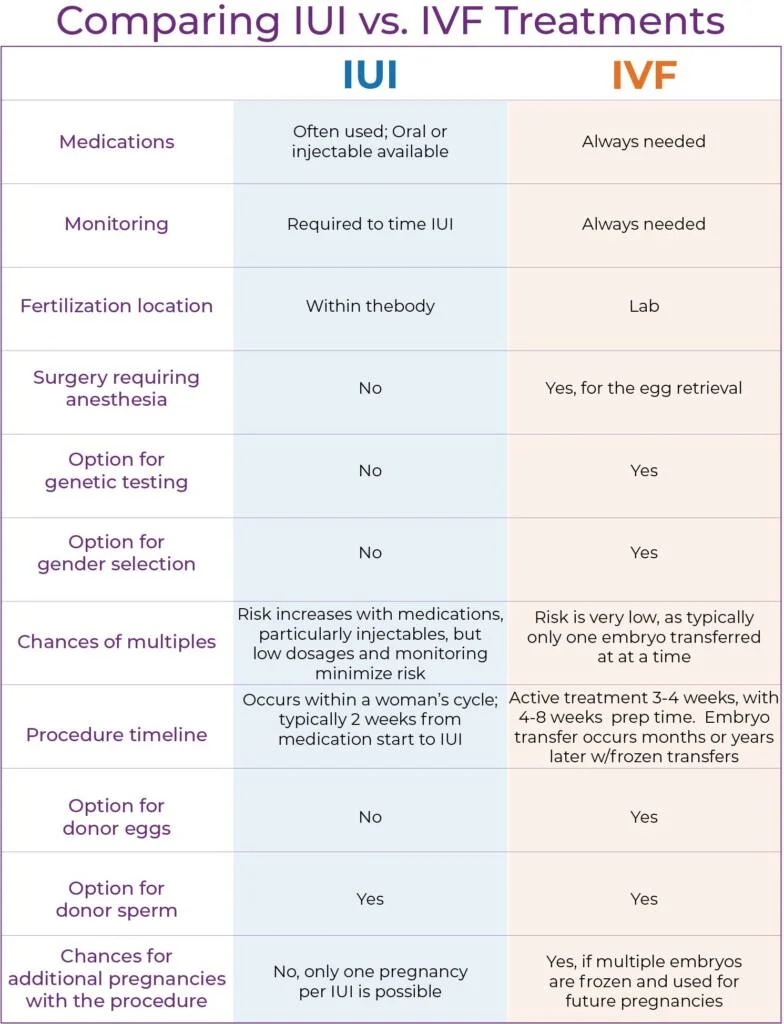
    Comparison chart of IUI and IVF treatments, detailing medications, monitoring, procedures, and success rates.

    Sperm Donor vs Co-Parenting: A Look at the Impact on Biological and Non-Biological Parents

    Co-parenting is a parenting arrangement where two individuals, regardless of their gender or relationship status, come together to raise a child as equal partners. Unlike sperm donation, both parents have legal and parental rights to the child, and they share the responsibilities and joys of raising a child together. This type of parenting arrangement can be seen in same-sex couples, divorced couples, or individuals who choose to co-parent with a friend or acquaintance.

    For the non-biological parent, co-parenting can be a fulfilling experience as they get to actively participate in their child’s life and build a strong bond with them. However, this arrangement also brings its own set of challenges. Co-parenting requires a high level of communication, trust, and cooperation between both parties, and it can be difficult to navigate when there are disagreements or differences in parenting styles. Additionally, the non-biological parent may face societal judgment and challenges in establishing their parental rights, especially in cases of same-sex co-parenting.

    For the child, having two parents who are not in a romantic relationship can also be confusing, and they may struggle with understanding the dynamics of their family. However, studies have shown that children raised in co-parenting arrangements can thrive just as well as those raised by traditional nuclear families, as long as there is a strong and supportive co-parenting relationship in place.

    The Impact on Modern Families

    As society evolves, so do the dynamics of modern families. Sperm donation and co-parenting arrangements have become popular options for individuals and couples who are unable or choose not to conceive through traditional means. These arrangements have allowed for more diverse and non-traditional families to exist, and they have also challenged traditional notions of parenthood and family structures.

    On one hand, sperm donation can provide a solution for individuals or couples struggling with fertility issues, single individuals who want to start a family, or same-sex couples who want to have a biological child. On the other hand, co-parenting offers a unique opportunity for individuals to have a child without being in a romantic relationship or to share the parenting responsibilities with a trusted partner. Both options have their own advantages and challenges, and the impact on modern families is still being studied and understood.

    Summary:

    In conclusion, sperm donation and co-parenting are alternative methods of starting a family that involve the contribution of a male. For the biological father in sperm donation, the role is limited to being a donor, with no legal or parental rights to the child. This can lead to potential emotional and legal issues in the future. On the other hand, in co-parenting, both parents have equal rights and responsibilities, but it requires a high level of communication and cooperation. These arrangements have a significant impact on modern families, challenging traditional notions of parenthood and family structures.