Tag: fertility options

  • What to Expect: Intrauterine Insemination vs In Vitro Fertilization

    In today’s world, many couples are struggling with fertility issues and looking for ways to start or expand their families. Fortunately, advancements in assisted reproductive technology have made it possible for couples to have children, even if they are facing challenges with fertility. Two popular options for couples who are struggling to conceive are intrauterine insemination (IUI) and in vitro fertilization (IVF). While both of these fertility treatments can help couples achieve their dream of parenthood, they are quite different in terms of process, success rates, and cost. In this blog post, we will explore what to expect when considering IUI and IVF as fertility options.

    Intrauterine insemination, also known as artificial insemination, is a relatively simple procedure that involves placing sperm directly into the uterus during ovulation. This procedure is often recommended for couples who have unexplained infertility, mild male factor infertility, or issues with cervical mucus. The process begins with the male partner providing a sperm sample, which is then washed and prepared in the lab to separate the healthy sperm from the seminal fluid. The sperm is then placed in a thin, flexible catheter and inserted into the uterus through the cervix. This process is usually painless and takes only a few minutes to complete.

    One of the main advantages of IUI is that it is a minimally invasive procedure and does not require any anesthesia. This makes it a more comfortable and less stressful option for couples who are trying to conceive. Additionally, IUI is less expensive compared to other fertility treatments, such as IVF. The success rates for IUI vary and depend on several factors, including the age of the woman, the cause of infertility, and the quality of the sperm. On average, the success rate for IUI is around 10-20% per cycle, which means that it may take multiple attempts before achieving a pregnancy.

    On the other hand, in vitro fertilization is a more complex and invasive procedure that involves fertilizing the egg outside of the body and then transferring it into the uterus. This process requires the woman to undergo hormonal injections to stimulate her ovaries to produce multiple eggs. The eggs are then retrieved through a minor surgical procedure and combined with sperm in a laboratory. After fertilization, the resulting embryos are monitored for a few days before being transferred into the uterus. Any remaining embryos can be frozen for future use.
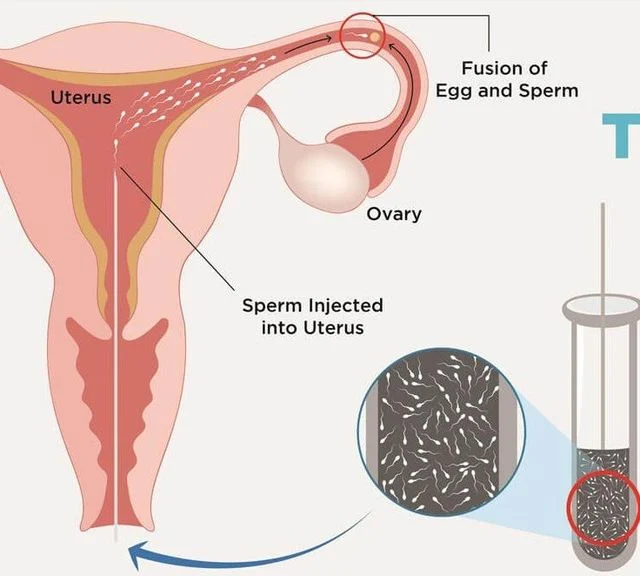
    Diagram illustrating the IUI process, showing sperm injection into the uterus and egg fertilization.

    What to Expect: Intrauterine Insemination vs In Vitro Fertilization

    IVF is often recommended for couples who have more severe infertility issues, such as blocked fallopian tubes, advanced maternal age, or severe male factor infertility. It is also a viable option for same-sex couples and single individuals who want to have a biological child. While IVF is a more invasive and expensive procedure, it has a higher success rate compared to IUI. On average, the success rate for IVF is around 40% per cycle, but this can vary depending on age, health conditions, and other factors.

    Aside from the difference in procedure and success rates, IUI and IVF also differ in terms of cost. The average cost of IUI is around $300-$1000 per cycle, making it a more affordable option for couples. However, as mentioned earlier, it may take multiple cycles to achieve a pregnancy. On the other hand, the average cost of IVF is around $12,000-$15,000 per cycle, making it a significant financial commitment for many couples. Some health insurance plans may cover a portion of the cost of fertility treatments, but it is essential to check with your provider to understand your coverage.

    In terms of emotional and physical impact, both IUI and IVF can be overwhelming for couples. The process of trying to conceive can be emotionally taxing, and fertility treatments can add additional stress and pressure. It is essential to have a support system in place and to communicate openly with your partner throughout the process. Both procedures also come with potential side effects, such as bloating, cramping, and mood swings, due to the hormonal medications used. It is crucial to discuss any concerns with your doctor and to take care of your physical and emotional well-being during this time.

    In summary, IUI and IVF are two different fertility treatment options that can help couples struggling with infertility to conceive. IUI is a minimally invasive procedure with a lower success rate and cost, while IVF is a more complex and expensive procedure with a higher success rate. It is essential to consult with a fertility specialist to determine which option is best suited for your individual situation. Regardless of which option you choose, it is essential to have realistic expectations and to take care of your physical and emotional well-being throughout the process.

    In conclusion, struggling with infertility can be a challenging and emotional journey for couples, but with advancements in assisted reproductive technology, there is hope for starting or expanding a family. Intrauterine insemination and in vitro fertilization are two popular fertility treatment options that can help couples achieve their dream of parenthood. While they differ in terms of procedure, success rates, and cost, both options have their own benefits and challenges. It is crucial to consult with a fertility specialist and to have a support system in place while going through the process. With patience, open communication, and a positive mindset, couples can navigate through these fertility options and hopefully achieve their goal of having a child.

  • Medical Fertility Testing for Same-Sex Couples: How it Can Help in the Journey to Parenthood

    Blog Post Title: Medical Fertility Testing for Same-Sex Couples: How it Can Help in the Journey to Parenthood

    Summary:

    For same-sex couples, the journey to parenthood can be a complex and emotional one. While advances in technology and society have made it possible for same-sex couples to have children, there are still many challenges that they may face. One of these challenges is the issue of fertility. Same-sex couples may have difficulty conceiving naturally, and this can be a source of frustration and heartache. However, medical fertility testing can offer hope and solutions for same-sex couples in their journey to parenthood.

    In this blog post, we will explore the importance of medical fertility testing for same-sex couples and how it can help in their journey to parenthood. We will discuss the various types of fertility testing available, the benefits of testing, and how it can guide couples in making informed decisions about their fertility options.

    Understanding Fertility Testing:

    Fertility testing is a process that helps identify potential fertility issues and provides information about a person’s reproductive health. For same-sex couples, this can be an essential step in their journey to parenthood. There are several types of fertility testing available, including hormone testing, semen analysis, and imaging tests.

    Hormone testing involves blood tests that measure the levels of various hormones in the body, such as estrogen, progesterone, and testosterone. These tests can provide information about the function of the ovaries and the menstrual cycle in women and the production of sperm in men.

    Semen analysis is a test that examines the quality and quantity of sperm in a man’s semen. This test can determine if there are any issues with sperm production or if there are any abnormalities in the sperm that may affect fertility.

    Imaging tests, such as ultrasounds and hysterosalpingograms (HSG), use technology to create images of the reproductive organs. These tests can help identify any structural issues that may be affecting fertility, such as blocked fallopian tubes or uterine abnormalities.

    Benefits of Fertility Testing for Same-Sex Couples:

    Medical fertility testing can provide same-sex couples with valuable information about their reproductive health. It can help identify any potential issues that may be affecting their ability to conceive and guide them in making informed decisions about their fertility options. Some of the benefits of fertility testing for same-sex couples include:

    diagram illustrating intrauterine insemination (IUI) procedure with uterus, sperm, and catheter labeled

    Medical Fertility Testing for Same-Sex Couples: How it Can Help in the Journey to Parenthood

    1. Identifying Fertility Issues: Fertility testing can help identify any fertility issues that may be present in either partner. This information is crucial as it can guide couples in choosing the most appropriate fertility treatment.

    2. Saving Time and Money: By identifying any fertility issues early on, couples can save time and money by avoiding unnecessary fertility treatments that may not be suitable for their specific situation.

    3. Providing a Clear Understanding of Options: Fertility testing can help same-sex couples understand the various fertility options available to them, such as intrauterine insemination (IUI), in vitro fertilization (IVF), or surrogacy. This information can help them make an informed decision about the best path to parenthood for them.

    4. Reducing Stress and Anxiety: The uncertainty and emotional toll of trying to conceive can be overwhelming for same-sex couples. Fertility testing can provide clarity and alleviate some of the stress and anxiety associated with the process.

    Guiding the Path to Parenthood:

    For same-sex couples, fertility testing can play a vital role in guiding them towards their goal of parenthood. It can provide couples with a clear understanding of their fertility potential and help them make informed decisions about their options. Some of the ways fertility testing can guide the path to parenthood include:

    1. Informing Treatment Plans: Fertility testing results can help doctors develop personalized treatment plans for same-sex couples. This can increase the chances of a successful pregnancy and reduce the risk of complications.

    2. Choosing the Right Fertility Treatment: With the help of fertility testing, couples can choose the most suitable fertility treatment for their specific needs. For example, if a woman has a low ovarian reserve, she may need to consider IVF instead of IUI.

    3. Planning for Surrogacy: For same-sex male couples, fertility testing can help determine which partner’s sperm is most suitable for use in surrogacy. It can also identify any potential issues that may affect the surrogate’s ability to carry a pregnancy.

    4. Managing Expectations: Fertility testing can provide a realistic understanding of the chances of success with different fertility treatments. This can help manage expectations and reduce disappointment if a treatment is not successful.

    In conclusion, medical fertility testing can be a valuable tool for same-sex couples in their journey to parenthood. It can provide crucial information about their reproductive health and guide them towards the most suitable fertility options. With the support of a qualified fertility specialist, same-sex couples can navigate the complexities of fertility and turn their dream of parenthood into a reality.